MSO BUSINESSOWNERS POLICIES ANALYSIS
(August 2022)
|
Collapsible Index D. Property Exclusions/Limitations |
INTRODUCTION
This article analyzes the 01 19 edition of the Mutual Services Office (MSO) Businessowners Policy–BU 04 01. Changes from the 01 10 edition are in bold print.
A named perils version of this form, BU 04 02–Named Perils–Businessowners Policy is available. A comparison of the two policies is provided at the end of this article.
PART 1 A–MAIN PROPERTY COVERAGES
Coverage A–Buildings (01 19 change)
Coverage A covers five types of building property. However, Coverage A applies only when there is a limit of insurance for coverage A on the declarations. This coverage is subject to all policy provisions that apply. The five types of building property are:
A. The named insured’s owned buildings that are usual to the named insured’s business operations. The business operations must be described on the declarations. Garages and storage or other structures that are both outdoor and similar are also considered building but only when related to the main building.
|
Example: Paris Periwinkle owns three buildings in an industrial park. Two buildings are part of Periwinkle Pigs, Inc. It sells pig iron. The third building is part of Paris Fun, Inc. It sells water slides. The named insured is Paris Periwinkle and Periwinkle Pigs, Inc. The business is described as pig iron sales. In this case, only the two Periwinkle Pigs, Inc. buildings are covered, even if all buildings are listed on the declarations. |
|
B. Additions while under construction or after they are completed. This includes alterations or repairs.
Additions that are under construction are covered on a primary basis only if there is no other insurance available. This coverage is excess over any other insurance available.
|
Example: Periwinkle Pigs is running out of space. It contracts with Able Bodied LLC to construct an addition to one of its existing buildings. The contract requires Able Bodied to provide builders risk coverage on the addition. If a loss occurs, the Able Bodied builders risk policy is primary, and this policy is excess. |
C. Equipment, fixtures, and machinery that are permanently installed in any of the structures described in A. and B. above. Some examples are elevators and heating and air conditioning systems. However, coverage is not limited to just these.
|
Example: Periwinkle installs heavy-duty rack storage units throughout their buildings. They are considered building because they are permanent. |
D. Fences, lamps, flag poles, and other items that are considered outdoor
yard fixtures.
E. Any materials or supplies that will be used to alter, construct, or repair any of the property described above. However, coverage is excess if other insurance is available for it. Theft coverage on this property is subject to the sub-limit on the Declarations Supplement.
|
Example: Periwinkle plans to upgrade the rack storage systems in all three buildings. The material is delivered and temporarily placed in the yard area next to building #1. When strong straight-line winds pick up the material and destroy it, only the materials to be installed in the two Periwinkle Pigs, Inc. buildings are covered. The material to be installed in the Paris Fun, Inc. building is not covered even though it was on Periwinkle Pigs, Inc. property. |
Coverage B–Business Personal Property
Coverage B insures the three types of property described below. However, in order for the property to be covered it must be at a described premises. Furthermore, Coverage B coverage applies only when a limit for it is shown on the Declarations.
A. Property that is tangible and that is owned by the named insured is covered. However, it is covered only if it is considered usual to the named insured’s business that is described on the Declarations.
B. Personal property of others that is similar to the named insured’s property described in A. above is also covered but only when in the named insured’s care, custody, and control for a business purpose. This coverage does not apply if the named insured is not responsible to another for the loss. It also does not apply to the amount of loss that is covered by another.
Any property that is considered customers’ property is covered but only up to the customers’ property limit shown on the supplemental declarations for customers’ property. The basic limit of $1,000 can be increased on the Declarations.
|
Example: Paris Periwinkle has the following property in building 1:
Coverage B insures the first four items above. The last two items are not covered because they are not related to the named insured’s business operations. |
C. Tenants improvements and betterments made to the premises are covered, subject to all of the following:
- The named insured is the tenant.
- The named insured may not remove the items from the premises.
- The items were acquired at the named insured’s expense, or the named insured installed them.
- The named insured is responsible for repairing or replacing them.
- The named insured’s rent does not include the cost of the improvements and betterments.
Coverage applies to only the remaining use interest of improvements and betterments that meet these criteria.
Note: Use interest is based on the amount of time that remains on the named insured’s lease. Use interest is 100% on the day the lease is signed. It is 0% on the date the lease ends.
|
Example: Bliss and Sons rent retail
space at Fabulous Mall. Bliss installed $25,000 in improvements when it moved
into its space, but it cannot remove the improvements when it leaves. The
lease is for five years. A fire destroys the store one year into the lease. The
most Bliss can collect for the loss is 4/5 (80%) X $25,000 or $20,000. |
D. This new item
applies only when Coverage A. is not being provided on this policy. (01 19
addition)
Building glass is covered but only if both of the following apply:
- The glass is not part of a sign
- The named insured is responsible to someone other than itself for
the loss. The responsibility can have been assumed by contract or be required
by law.
This is considered an extension of Coverage B, but it does not have a
separate limit. Therefore, the applicable Coverage B limit applies.
Note: This replaces The Building Glass Coverage – Limited Coverage that
was part of Part I B-Supplemental Coverages of the prior edition.
|
|
Example: Kettle
Drum is the only tenant in the Glenway Building and, based on its lease, it is responsible for all glass
losses. Vandals break all the windows on the main floor. On their way out,
they set a fire in the staircase that leads to the second floor. Firefighters
break out the second-floor windows to fight the fire. All glass breakage is
covered up to Kettle Drum’s Coverage B Limit. |
Coverage C–Loss of Income Resulting From Direct Covered Loss
This coverage applies to only loss of income and related expenses the named insured sustains, as this section describes.
A. Coverage
1. This coverage is provided when the named insured’s business or operations are interrupted or when the described premises cannot be occupied. The business income that would have been earned without the necessary interruption and that is described below is covered. Expenses that are related to the business income loss and that are actually incurred are also covered.
a. Loss of income is determined by adding the reduction of net profits to the operating expenses. Operating expenses are based on what is normal for the business, and that must continue even though a loss has occurred. Some examples of continuing expenses are payroll, utilities, and rent.
It also includes income lost because a covered loss caused an existing written agreement to be cancelled or suspended. The named insured must be able to prove that it could have completed the agreement according to its terms if only the covered loss had not occurred.
|
Example: A fire sweeps through Sweet Things Bakery. Part of the loss of income claim is losing the contract with Prairie Days Outdoor Theater. Scenario 1: The agreement was pending and was not signed at the time of loss. Cancellation of this contract is not loss of income. Scenario 2: The agreement was in place, but Prairie Days told Sweet Things that it could no longer accept its products due to quality issues. Cancellation of this contract is not loss of income. Scenario 3: Prairie Days is devastated by Sweet Things’ loss but cancels the contract because it has to deliver baked goods to its customers. This cancellation is considered loss of business income. |
|

b. This item applies only if the named insured receives rental income from property on its described premises. The reduced rental income because of the covered loss is considered business income. Any of the tenant’s obligations that become the named insured’s obligations under the terms of the lease because of the loss are also covered.
|
Example: Testing Grounds Industrial
Park has four tenants. A fire damages Building 100 that Park Two occupies.
Park Two’s lease states that it is released from all obligations to Testing
Grounds and any utility companies in case of fire. As a result, Testing
Grounds’ business income loss is the loss of rental income from Park Two plus
the Park Two’s utility obligations. The utility obligations begin at the time
of the direct damage loss. |
c. Extra expenses that are needed in order for the named insured to continue operations are covered. However, they are covered only if they are not standard company expenses and they are reasonable. Coverage is limited to the extent to which they are necessary to continue the business operations.
There is no coverage for incurred expenses that could have been discontinued during the period when the business operations had been interrupted or when the premises could be occupied by the tenant but were not.
BU 50 10 may appear on the Declarations. If it does, paragraph A.1.a. above does not apply. This means that business income loss due to operations being interrupted is not covered. However, coverage continues to apply for loss of rental income under A.1.b. and extra expense under A.1.c.
Note: This is called a Trigger Endorsement. Instead of attaching an extra piece of paper called BU 50 10, the wording that would be on that endorsement is built into the policy. This is unique to MSO policy construction.
Related Article: MSO Businessowners Policies Trigger Endorsements
2. A direct covered loss must first occur at a described premises in order for any resulting loss and expenses to be covered. That direct covered loss must cause a necessary interruption and/or damage to a described premises to be unavailable for its tenant.
There is also coverage if a civil authority prevents the described premises from being occupied. The civil authority prohibition must be due to a loss at a local property that is not owned or occupied by the named insured. The loss must be the result of a cause of loss that would have resulted in a covered loss under this policy, if the loss was to the named insured’s property. This coverage is limited to 14 consecutive days commencing on the date of loss.
Note: The term local is not defined. This means it could go beyond just the neighboring building, but how far could be a point of discussion.
|
|
|
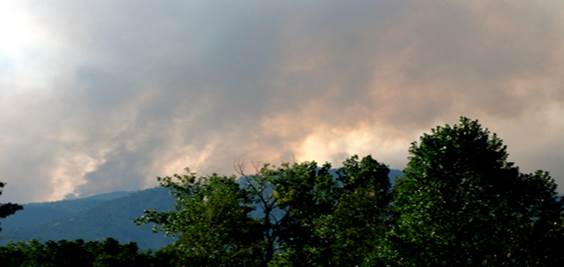
Example: The civil authority closes Highway 267 to all traffic because of a wildfire in the area. UnderWoods is located on Highway 267 but far away from the wildfire. It cannot conduct normal business operations because neither it nor its customers are allowed to be on the road. The wildfire is almost 10 miles away. Is this still considered local? |
3. The named insured is required to take action. It must immediately act to reduce the business income loss. The acts are not required to be extraordinary but are to be reasonable. The goal must be to reduce the period of time the operations are down or that the premises cannot be occupied by a tenant. The policy provides examples of how this can be accomplished, but these examples are not requirements for the actions that must be taken. The named insured could resume partial operations at the existing location. It could also resume operations at another location. Another suggestion is that the named insured expedite the restoration of the damaged property.
How the named insured implements this requirement will impact the business income loss settlement.
|
Example: A tornado damages Gracie’s Cat House. Neither cats nor humans are injured, but Gracie is shaken. She takes two weeks off to collect her thoughts. The property is left unattended during that time, and she cannot be reached. She returns reinvigorated and is ready to act. However, she was surprised when her insurance company refused to pay loss of income coverage for the two weeks she was gone. |
B. Coverage Period
This is a time element coverage, so time determines how much is paid. Payment is limited to the expenses incurred and the loss sustained in the shorter of the following time periods:
1. The time required to get the business or operations back to the same level of production or quality that existed before the loss occurred.
Note: This means that if the service was terrible and the offerings were fairly limited at the time of loss, the coverage period ends when the restaurant returns to that same standard.
2. Restore, repair, or replace the part of the property that the direct covered loss damaged.
|
Example: Gleeful Tea Sippers sustains a serious loss. Repairs and restoration will take at least six months. Betty, the owner, learns that a competitor is going out of business. Gleeful can move into the competitor’s location and resume operations in two months. Betty’s loss of income coverage ends when she opens for business at the new location. |
|
Most businesses that sustain a loss cannot resume operations and return to full income immediately upon reopening. Recognizing this, the insurance company provides 30 consecutive days of additional coverage. This coverage continues until the named insured either achieves the same income level that existed before the loss or until 30 days after operations resume, whichever is less.
|
Example: Gleeful Tea Sippers mails notices to its former customers informing them of the location change. Betty announces the grand reopening, and the announcement receives excellent press coverage. Betty is surprised and delighted that her income is higher than she expected and actually exceeds the level of income before the loss one week after she resumes operations. Her loss of income coverage ends at that time. |
This additional 30 days of coverage does not apply to the 14 days coverage when a civil authority prohibits the named insured from occupying the property under A.2. above.
The named insured may occupy a premises it does not own and therefore does not control its repair, replacement, or restoration. In that case, the insurance company provides coverage for the necessary period of time for such repair, replacement, or restoration to take place or for 90 days, whichever is less.
The policy expiration date does not affect the coverage period. However, coverage is limited to not more than the 365 days from the first day of the covered loss.
|
|
Example: Meckington Coffee Shop occupies space on the first floor of a 50-story office building. A fire damages the first four stories of the building, including all elevators. The fire must be investigated and the entire building inspected before reconstruction can begin. The entire reconstruction time period is 14 months. Meckington cannot relocate because it is the coffee shop that services the entire building. Meckington’s coverage ends after 365 days, even though repairs to the building are not yet complete. |
C. Coverage Limitations
There is no coverage when any of the following extend the loss of income time period or add to the amount of loss of income:
1. Lease or other agreement cancellation or suspension. The only exceptions are those agreements specifically described in A.1.a. above.
2. Any loss to electronic data processing equipment, media, and software the named insured uses in its business or operation that exceeds 30 consecutive days
3. When strikers or others interfere with repairing or replacing the property. There is also no coverage if they interfere with the named insured resuming its operations. Only interferences that take place at the described location apply.
|
Example: We Sell Pets sustains a major loss but is determined to rebuild. Animal advocates are equally determined that it will not reopen. Scenario 1: Scores of pet owners and their pets confront the contractors hired to do the work every day. The contractors eventually refuse to cross the lines. The standoff continues for weeks, but We Sell Pets eventually reopens. It files a claim for loss of business income. The insurance company pays the total loss except for the period of time the animal advocates interrupted repairs. Scenario 2: Scores of pet owners and their pets demonstrate at the local zoning board meetings as a way to block We Sell Pets from receiving permits for it to begin reconstruction. The standoff continues for weeks, but We Sell Pets eventually gets its permits, completes repairs and reopens. It files a claim for loss of business income. The insurance company pays the entire loss, including the period of time the animal advocates interrupted repairs because the interference was off the described premises. |
D. Limits of Liability/Coverage
1. When “included’ is entered on the Declarations for Coverage C. Loss of Business Income, there is no maximum dollar limit.
2. When a dollar amount is entered on the Declarations for Coverage C., Loss of Business Income, the most paid in a single occurrence is the dollar amount entered.
Note: This is a significant change from what is being provided in item 1.
3. The words Deleted, Nil, N/A, Not applicable, or similar terms may be entered on the Declarations for this coverage. When so entered, all coverage for Coverage C is eliminated.
Coverage D-Money and Securities–Expanded Coverage Extension
This coverage applies only if Expanded Coverage is selected on the Declarations. Coverage applies to money and securities the named insured uses in its business or operations but only as described below. The limits are on the Declarations Supplement. Coverage is subject to all policy provisions that apply to this coverage.
A. On Premises
Money and securities are covered while either within the premises described on the Declarations or within a bank. Coverage also applies if the money and securities are within a place of safe keeping, similar to a bank.
Note: The key word is within. The money and securities must be both on the premises and within that premises. This means that money and securities outside an owned structure or outside the space a tenant occupies is not on premises.
B. Off Premises (01 19 change)
Money
and securities are covered while being carried. They can be carried by the
named insured or its partners. It
can also be carried by an officer with authorization to do so or an employee. Coverage
applies to such property while in route to or from the premises and any place
of safe deposit or bank. If a stop is made to the living quarters of a person
who is carrying the property, there is also coverage during the stop. There is
no coverage if that living quarter is a final destination.
The term “employee” used in this
coverage is expanded to include leased employees and temporary workers.
Note: The coverage is provided when money and securities are in route. A question must arise as to how long the money and securities can remain in the living quarters and still be considered in route. Another question would be whether or not the person carrying the items must remain with them at all times.
|
Example: Max plans on taking the
night deposit from his store to his bank. It is late on Friday when he gets
to the bank, and he realizes he has forgotten the night deposit bag at home.
He decides to stop by the bank on Saturday morning and handle the deposit in
person. However, he oversleeps on Saturday and fails to make the deposit. The
bank is closed on Sunday. While he is attending church services on Sunday
morning, a burglar breaks into his house and steals the deposit along with
several personal items. Does Off Premises coverage for money and securities
apply to this loss? |
C. Deductible (01 19 change)
The
amount of deductible in any one occurrence is $200. In the prior edition, the deductible could only be increased on the
declarations, but in the current edition, it can be changed on the
declarations. This means that it could even be decreased.
D. Condition
Coverage applies only when Expanded Coverage applies to Coverage B. However, if there is no Coverage B, this coverage can still apply, but only if BU 50 01 is listed as an endorsement on the Declarations.
Note:
BU 50 10 is called a Trigger Endorsement. Instead of attaching an extra piece of paper called BU 50 10, the wording that would be on that endorsement is built into the policy. This is unique to MSO policy writing.
Related Article: MSO Businessowners Policies Trigger Endorsements
PART 1 B–SUPPLEMENTAL COVERAGES
There are 22 supplemental coverages. The limits provided are additional limits unless stated within the specific coverage that they are not. They do not change anything in the policy except as described.
1. Accounts Receivable Coverage (01 19 change)
This coverage applies only if Coverage B is provided.
- Coverage applies for a covered loss when the named insured’s accounts receivables or credit card billings or transactions in digital or cryptocurrency suffer a covered loss, and amounts due that are documented by them cannot be collected. The sum of the following will be paid up to the limit for this coverage on the Declarations Supplement: Amounts owed that cannot be collected.
- Any unusual collection expenses incurred because of the covered loss
- Any other reasonable expenses or costs incurred while re-establishing records of accounts receivable after a covered loss
None of the Part I D–Property Exclusions/Limitations apply. Under Part I E–Losses Not Covered, the only exclusions that apply are 7. Intentional Loss and 12. A. Wear and Tear.
Two exclusions are introduced that apply only to this coverage:
A. Loss that is due to any error or omission in accounting, billing, or bookkeeping
B. Any loss when an audit or inventory is the only proof that it occurred. These can be used to substantiate a loss but cannot be the only proof.
This supplemental coverage is not subject to the deductible.
|
|
Example: Kendra reviews the month’s revenue and notices that March 24’s revenue is much lower than any Friday night in the past year. She also notes that there are no credit card receipts for that night. She realizes that they must have been lost. She searches but cannot find them and files a claim with her insurance company. The company denies the claim because there is no proof that a loss actually occurred other than her own audit. |

2. Automatic Increase in Policy Limits (01 19 change)
A. Coverage A
The building limits are automatically increased by the percentage entered on the Declarations. The increase is an annual percentage and therefore must be pro-rated throughout the year.
B. Coverage B
The business personal property limits automatically increase by 10% during periods when the named insured customarily has an increased amount of business personal property. Examples of such times would be holiday or seasonal sales, but these are not the only reasons for such increased.
As an incentive to insuring to value, the business personal property limits are automatically increased by 30% for the time period(s) described above when the named insured is carrying at least 100% average monthly values for the 12 months prior to the loss date.
|
Example: Milly carries a business personal property limit of $40,000. Her normal business personal property values fluctuate between $25,000 and $30,000, but she must stock up for a blow-out Milly’s Day Out sale each August. Her values just before the sale are often up to $60,000 and then drop to less than $15,000 right after it. A tornado destroys the building she occupies the day before the sale. As part of the claim investigation, she submits reports of her last 12 months inventory that result in average monthly values of $30,000. This means that she qualifies for the 30% increase. This means that the limit available to pay for her loss is determined by multiplying $40,000 x 1.30 = $52,000. |
3. Building Code/Law Coverage (01 19 change)
A. The limit for this coverage is determined by multiplying the Coverage A. limit of insurance by the building code/law coverage factor on the Declarations.
|
Example: Grady’s Drug Store’s limit of insurance for Coverage A. is $1,000,000 and a code/law coverage factor is .10. The building code/law coverage limit is $1,000,000 X .10 = $100,000. |
This limit is the most paid for the total of the expenses described in items 1, 2, and 3 below.
These items are covered only if they are a consequence that follows directly from a covered loss. The covered loss must occur on the described premises.
1. Losses incurred because building, land use or zoning codes or regulations are enforced are covered only if they were in effect at the time of the loss. There are three covered types:
· Any that requires a property to be demolished because other parts of that same property have been damaged by a covered loss.
· Any that are directly related to how a building or structure must be repaired or constructed.
· Any that describe the types of building or land use occupancies that are eligible to be at the premises.
2. Increase in expenses the named insured incurs in the rebuilding and repair process in order to meet building, zoning, or land use codes, laws, or regulations that were in force on the date of loss. The rebuilt property must be intended for the same type of occupancy. However, this is waived when the regulation does not permit that occupancy.
3. Expenses the named insured incurs to demolish undamaged portions of the building in order to meet building, zoning, or land use codes, laws, or regulations that were in force on the date of loss.
The Coverage C–Loss of Income Resulting from Direct Covered Loss time period is extended to include the time needed to comply with Paragraph 1. above. However, the time period for the entire Coverage C. time period remains limited to a maximum of 365 days that are consecutive and start with the date of loss.
|
Example: Grady’s Drug Store owns a 100-year-old building. It occupies the first floor and rents out the two apartments on the second floor. A fire that starts in the kitchen of one of the apartments damages 60% of the building. Several regulations passed in the last 100 years are enforced when the building is renovated because more than 50% of it was damaged. The additional expenses are as follows:
|
|
|
B. This supplemental coverage has two specific payment limitations:
1. Nothing is paid until the property is actually repaired or replaced subject to the How Losses are Settled Condition Part I G. The replacement can be at either the existing premises or another. The insurance company must agree in writing that the property can be rebuilt at another premises.
2. There is no payment for expenses related to pollutants, fungi, mold, lead or asbestos even if they are related to a building code or regulation. Specifically, there is no payment for treatment, containment, monitoring, detoxification, removal, testing, cleanup or neutralization.
C. The most the insurance company pays are the costs to demolish and clear the site PLUS the cost to replace or rebuild the property on the described premises. This is subject to the limit for the property on the Declarations and the Limits of Liability under How Losses are Settled.
Note: The cost to rebuild at the described premises requirement does not mean that the property must be rebuilt on the same site. It only means that payment will not exceed the amount to do so at the same or another site.
|
Example: Grady’s Drug Store examines its
options. The cost to construct a frame building at the current location is
$1,000,000. It costs $1,500,000 to rebuild it to meet city regulations. Grady
has a $100,000 limit for building code/law coverage. He can rebuild outside the
city limits for only $1,050,000. Grady decides to move and will still receive
the additional coverage because he must still demolish the undamaged portion
of the building, clear the site, and make the new building comply with ADA requirements.
However, Grady will not be required to build a masonry noncombustible
building. |
D. This coverage applies only if the building is insured on a replacement cost basis. There is no coverage if the building is written on an actual cash value basis.
4. Business Property Coverages
A. Coverage A Extension
When there is no Coverage B. on the policy, the following items are covered under Coverage A but only if they are owned by the named insured:
1. 1 Landlord furnished property that is within an apartment. This applies only if the named insured is the landlord.
2. Air conditioners, fire extinguishers, floor coverings, maintenance equipment and similar property that is used to either service or maintain the premises described on the declarations. Appliances used for laundry, refrigeration, ventilation, cooking or dishwashing are also covered.
3. Furniture that is intended to be used outdoors
Note: The policy does not state what happens if there is coverage under Coverage B. Pricing could be much different if all of the above reverts to Coverage B.
|
|
Example: Jerry owns a commercial/residential building. The first floor has three retail stores, and the second through fifth floors are residential units. His values are as follows:
The building rate is .50. The premium is .50 X 1,500,000 = $7,500. Jerry opens his own business in one of the retail store spaces and needs $50,000 in business personal property coverage. However, a problem occurs when he adds Coverage B. to his building policy. The Coverage A Extension becomes Coverage B. This means the pricing changes as follows:
Jerry’s premium increases to $10,000 because he added Coverage B. |
B. Consequent Loss Coverage (Spoilage)
Property that spoils due to power, cooling, heating, or refrigeration service that is disrupted is covered as Coverage B. but only up to the limits on the Declarations Supplement. If there is no Coverage B, this coverage does not apply. The only property covered is property that is inside a building or structure on the described premises. The services disrupted must be due to one of the following:
1. Loss of Utility Services
A direct loss to utility owned property causes the utility services to the described premises to be disrupted. The cause of the direct loss must be a cause that would have been covered under this policy.
2. Mechanical Breakdown
A mechanical breakdown or faulty operation that is both accidental and sudden. Refrigerant leakage is an example of faulty operation, but only if it is accidental and sudden. (This means that a loss due to a slow leak would NOT be covered.) The equipment impacted must be on the described premises and must provide cooling, refrigeration, electrical or heating to the premises.
This coverage is limited to those events that are outside of the control of the named insured. This means that losses due to power being turned on or off, failure to connect units to power, lack of fuel and poor maintenance will not be covered.
When a spoilage loss described within this coverage is caused by a covered loss to equipment that is located on the described premises, it is not subject to the limits on the supplemental declarations. This means the loss would be subject only to the Coverage B. limit on the Declarations. The equipment must supply power, cooling, heating or refrigeration. It is important to note that this equipment is not required to be owned by the named insured.
If the term BU 50 12 is listed on the Declarations as an endorsement, this supplemental coverage does not apply.
Note: This is called a Trigger Endorsement. Instead of attaching an extra piece of paper called BU 50 12, the wording that would be on that endorsement is built into the policy. This is unique to MSO policy writing.
Related Article: MSO Businessowners Policies Trigger Endorsements
C. Off Premises Coverage
Personal property, including property that is described in the Coverage A. Extension above, covered by this policy is covered for loss when outdoors but only if within 100 feet of the described premises. Property that is more than 100 feet off the premises is covered as follows:
Coverage A
The limit on the Declarations Supplement is the most paid if Coverage A property is off the described premises. Coverage applies only if the property is temporarily off the premises and the reason it is off premises is for repair, maintenance, or service. This is an extension of Coverage A, and the limit on the Declarations is a sub-limit of the Coverage A limit.
|
Example: George sends his air
conditioning unit to the authorized service center to be repaired. The Coverage
A extension covers it while it is off premises. |
Coverage B (01 19 change)
The limit on the Declarations Supplement is the most paid if property that Coverage B insures is off the described premises either in transit or at either of the following locations:
· Any location but only if on a temporary basis.
·
A rented
storage unit.
When property is in transit, coverage is extended to include direct physical loss due to the following any of the following:
· Vehicles derailing, colliding, or crashing
· Vessels sinking or being stranded
· Bridges, culverts, docks, or wharves collapsing
|
Example: George has both Coverage A
and Coverage B. As a result, he does not have any Coverage A
Extensions. He sends his air conditioning unit to the authorized service
center to be repaired. Coverage B insures the unit while
it is off premises and in transit. This means there is coverage when the
ferry that transports it sinks. |
D. Personal Effects
This extension applies to only Coverage B. It insures against loss to personal effects of the named insured, its directors, employees, volunteers, or officers. Coverage applies only if the qualified party that claims the loss owns the property and only if the personal effects were on the described premises when the loss occurred. The most paid in a single occurrence is the limit on the Declarations Supplement.
This coverage applies only if there is no other insurance coverage available to pay for it.
|
Example: A windstorm damages Pleasant
Valley Office Services. Peter, Jeff, Sally, and Greta each lose $500 in
personal effects that were in their offices. Peter and Jeff each have a $1,000
deductible on their homeowners policies, so they are
eligible to collect under Pleasant Valley’s Personal Effects Extension. Sally
has only a $250 deductible, so she does not receive anything because there is
insurance. Greta does not have homeowners coverage, so
she can also collect. |
E. Each of the Business Property Coverages above are extensions and do not provide additional amounts of insurance. The only exception is the coverage that Consequent Loss Coverage (Spoilage) provides.
5. Collapse Coverage
A. There is coverage when a building or a structural part of the building collapses, as this supplemental coverage describes. The collapse must be a consequence of any of the following:
1. A cause of loss described in Coverage B Basic Plus Coverage. This cause of loss applies to both buildings and business personal property.
2. Decay that is both hidden and unknown to an insured before the collapse occurs
3. Insect or vermin damage that is both hidden and unknown to an insured before the collapse occurs
4. The cumulative weight of people, equipment, animals, or contents
5. The weight of rain when the rain accumulates on a roof
6. Defective material or methods that are used to construct, remodel, renovate, or repair the building or structure
B. There is a limitation as to the types of property that items 2., 3., 4., 5., and 6. above insure. Collapse coverage applies to the following property only when a building or structural part of the building collapses, and that collapse causes the listed property to collapse:
- Antennas. This includes towers, masts, and lead-in wiring.
- Awnings
- Beach or diving platforms. This also includes equipment and structures that support them.
- Wharves
- Docks
- Piers
- Gutters and downspouts
- Fences
- Outdoor swimming pools. There is no limitation on indoor pools.
- Any paved surface
- Retaining walls
- Yard fixtures
This coverage does not provide additional limits of insurance.
|
|
Example: The Donaldson Dairy Ice Cream Store collapses. The event causes the following damage: · The building is destroyed. · The cell phone antenna on the roof is destroyed because it fell when the building collapsed. · Falling debris shreds the gutters, downspouts, and awnings on the owned building next to the ice cream store. · Falling debris destroys the privacy fence behind the store. The investigation reveals that the collapse was due to an infestation of carpenter ants. The loss adjuster interviewed all insureds and verified that none of them knew about the ants. Coverage applies to all property items listed. |
6. Credit Card/Forgery/Counterfeit Money Coverage (01 19 change)
A. Coverage applies if an insured sustains a financial loss because of any of the following:
1. Legal obligations the insured has for credit or fund transfer (debit) cards issued to him or her. Only the amount that must be paid when an unauthorized person uses them is covered.
2. Activity that had not been authorized
but is taking place in the insured’s name in online/electronic payment services
or transactions in cryptocurrency or blockchain.
3. When checks, drafts, notes, and similar negotiable instruments are forged or altered
4. Credit or debit card transactions that
were accepted by the insured’s business but that were actually
fraudulent or disputed. This is limited to the insured’s legal
obligation. This coverage does not apply if the costs are assumed by a bank or if
other insurance is available to cover the loss.
5. When the insured accepts United States or Canadian counterfeit paper money
Coverage is restricted to the limit on the Declarations Supplement.
The insurance company agrees to provide a defense if a suit is brought against the insured under 1. or 2. above. The insurance company selects the legal counsel it uses. The suit must involve obligations described under 1. 2. 3. above.
Note: The policy does not identify the party that bears the cost of the defense or if that defense is subject to the limit on the Declarations Supplement.
B. There is no coverage for financial loss caused by:
1. Any of the following, regardless of whether they act alone or collude with others to act:
· Employees
· Trustees
· Directors
· Authorized representatives
2. Any person entrusted with anything described in 1., 2., 3. 4. or 5. above
C. Multiple acts of one person or in which that one person is suspected are a single occurrence.
|
Example: Presley is delighted when
Katie leaves her wallet at the restaurant. He surreptitiously picks it up and
quickly leaves the restaurant to make some purchases. Katie is shocked when
she checks her online accounts. While there were multiple purchases and
multiple banks involved, this is considered a single occurrence. |
D. The per occurrence deductible for this coverage is $100. It can be changed.
|
Example: Katie is subject to a single $100 deductible because Presley’s spending spree is considered a single occurrence. |
7. Debris Removal Coverage
A. This coverage pays for the necessary and reasonable cost to remove debris from a covered property loss. Items B. and C. below explain the amount the insurance company pays.
B. The only costs covered are the ones that the named insured actually incurs. However, some costs may not be covered because the amount is capped in two ways.
- The amount of the covered loss that generated the debris multiplied by the Debris Removal factor on the Declarations Supplement
- Debris removal is not additional insurance. This means that the amount of the covered loss plus the incurred debris removal cannot exceed the limit of insurance.
|
|
|
Example: General Store sustains $125,000 in covered damage. The limit of insurance is $150,000, and the debris removal factor on the Declarations Supplement is .25. The debris removal expenses incurred are $40,000. The maximum amount paid for debris removal is $125,000 X .25 = $31,250. However, this must then be compared to the limit of insurance. $125,000 + $40,000 = $165,000. Since the limit is $150,000 and the covered damage is $125,000, the maximum debris removal payment is $25,000. |
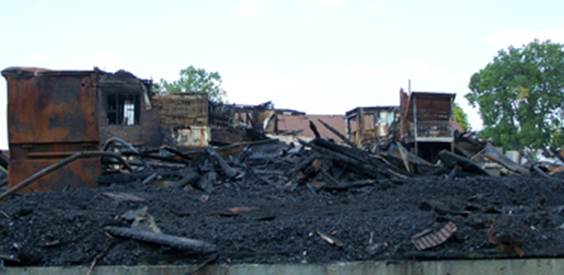
C. There is an additional amount of insurance available because of the shortfall in B. above. When the limit developed by multiplying the factor by the amount of the loss or the available amount of insurance available is insufficient, an additional amount of debris removal is provided. The limit is on the Declarations Supplement. This is not an either/or situation. Whichever of the two that produces the least amount of coverage is the limit that applies.
|
Example: The additional Debris Removal limit is $10,000. Using the General Store scenario above, the maximum limit available under the first item is $31,250 + $10,000 =$41,250. This approach covers the entire $40,000 cost. Under the second item, $150,000 + $10,000 = $160,000. $160,000 - $125,000 = $35,000. $35,000 is used because it is less than $41,250. |
D. Not all debris removal expenses are covered. This supplemental coverage does not pay the following:
1. The cost to remove trees (or any part of the tree) that are considered debris
2. The expense of pollution extraction. This applies if the pollutants are in land or water. There is no coverage even when the property is considered covered.
3. The expense to remove, replace or restore land or water because it is considered polluted or even if it is considered a pollutant. Costs to restore, replace, or remove water or land that itself is either polluted or is a pollutant.
Note: Items 2. and 3. also exclude expenses that any municipal, state or federal rule, ordinance, code, law, or regulation imposes to dispose of such pollutants.
4. Costs to remove volcanic ash, dust, or particulate matter. However, if any of them actually causes damage and the damage requires removing them, the expense to remove these damaging items is covered.
|
|
Example: A dormant volcano near the Windermere Apartments suddenly erupts and spews ash throughout the area. The ash lands on the roof of a building, and it collapses. The cost to remove that ash is a covered debris removal expense. The ash also covered the Stormy Hill Barber Shop. The cost to remove it is not covered because the ash did not cause any other damage. |

E. This coverage has a time limitation. It only applies to expenses reported to the insurance company within 180 days of the date of a covered direct physical loss.
F. The only additional limits of insurance this supplemental coverage provides are as described in 7.C. above. 8. Electronic Data Coverage (01 19 change)
This coverage is subject to an annual aggregate limit. Annual aggregate means that once the limit is exhausted, coverage ceases.
A. Coverage applies to expenses the named insured incurs to restore or replace destroyed or corrupted electronic data that it owns. The corruption or destruction of the data must be due to a covered direct physical loss.
Note: The prior edition did not state that
coverage was only for only such data that is owned by the named insured.
B. Part 1 E–Losses Not Insured, Exclusion 2. Computer Hacking and Computer Virus Exclusion does not apply. However, there is an important exception. There is no coverage if an employee or a party the named insured retains to work on the computer or computer system manipulates the computer, its system, or its data in a way that causes a loss.
C. The special limit on the Declarations Supplement is the total aggregate the insurance company pays for each annual or 12-month policy term. This is not a cumulative limit. In addition, a loss may begin in one year and continue into another. In that case, only the limit in effect at the time the loss began applies.
|
Example: Viola’s Violins policy term is 01/01/2021 to 01/01/2022. In December, Viola notices a problem with her electronic data but tries to work around it to get through the Christmas season. Afterward, she asks her son to examine the entire system, and he finds that the system is badly compromised. She must replace the hard drive and spend considerable time and effort to retrieve the data. She submits two claims to her insurance company. The first claim is for the policy year 01/01/2021 to 01/01/2022, and the second is for the policy year 01/01/2022 to 01/01/23 because the damage occurred in both years. The insurance company investigates and informs Viola that it will only pay $10,000 for the 01/01/2021 to 01/01/2022 policy year. Further
investigation reveals that a former employee introduced a virus into the
system the day Viola fired him because he was angry with her. The insurance
company then denied all coverage because he was still an employee when he corrupted
the system. |
9. Emergency Removal Coverage
When the named insured is aware that its property is in imminent danger from a covered cause of loss and takes the precaution to remove the property from the danger, this coverage comes into play. The property that is removed is covered for any cause of loss wherever it is for up to 30 consecutive days.
Part 1 E–Losses Not Insured and the limits under Supplemental Coverages 5. Business Property Coverages C. Off Premises Coverage does not apply.
This is not additional insurance because this is property that is already covered and would have been lost to a covered cause of loss had the named insured taken the prudent step to remove the property.
|
Example: The wildfire is heading towards town. Ridley piles as much of his inventory as he can into his van and heads in the opposite direction. His goal is to beat the evacuation order and protect his property. He almost makes it to his destination when an emergency vehicle clips the van and sends it into a creek. Ridley gets out safely, but the contents are destroyed. The entire loss is covered and is not subject to any limitation. |
|
![image001[1] copy](198_0402_files/image026.jpg)
10. Employee Dishonesty Coverage (01 19 change)
A. When a dishonest act of an employee causes a loss to the named insured’s money, securities or other types of business personal property, there is coverage. This coverage applies if the employee acts alone or in collusion with others. The limit on the Declarations Supplement is an occurrence limit, and all acts that relate to one another are treated as a single occurrence.
B. The insurance company covers only losses discovered during the current policy year and up to 12 months after the policy expires. Coverage also applies if the loss is discovered within 12 months of the expiration of the prior policy term, and that policy will not respond to the loss.
Note: Limits are not cumulative. Only a single limit applies to losses that occur over two or more years, regardless of the number of acts, years, or policy terms involved.
Related Court Case: Embezzlement over Five-Year Period Was a Series of Acts: Per Occurrence Limit Applied
|
Example: Billy, the butcher, was very
loyal. He worked for Mel’s Meats for 15 years. Mel didn’t know it, but Billy
had a side business providing his brother’s restaurant with special cuts of
meat. Mel’s son witnessed a delivery and, when confronted, Billy admitted he
stole from Mel for years. The entire $100,000 loss would be covered if the
limits were cumulative. However, payment is limited to the $5,000 limit on
the Declarations Supplement. |
C. There must be physical evidence that a loss has occurred for this supplemental coverage to apply. There is no coverage if the only evidence that a loss occurred is an inventory shortage or a discrepancy in a profit and loss statement. Even though such inventories or profit and loss statements cannot be used as the only evidence of a loss they can be used to substantiate a loss.
D. If the named insured, a director,
officer, partner, or trustee know, prior to coverage taking effect, that an
employee had committed a dishonest or fraudulent act, there is no coverage for
any loss that employee commits.
E. Employees are expected to be honest. The named insured, a director, officer, partner, or trustee may find out that an employee committed a dishonest or fraudulent act. In that case, there is no coverage for any loss that employee commits beginning on the date that any of these persons discover such an act. This applies whether or not a claim for that action is reported to the insurance company.
F. The deductible for this coverage is $200 per occurrence. It can be changed.
11. Fire Expense Coverages
A. Fire Department Service Charges
There is coverage if the named insured is contractually obligated to pay service charges to a fire department. The most paid is the limit on the Declarations Supplement. This coverage pays only if all of the following apply:
· The obligation is in writing
· The fire department service is to protect or save insured property
· The direct physical loss for which the department is called is covered under the policy
· The service call was made after the contract had been executed
· The call was not a false alarm
B. Fire Extinguisher Recharge Expense
Any extinguishing equipment that is used to put out a fire can be recharged under this coverage. The maximum paid for all equipment that needs to be charged at a single premises is the limit on the Declarations Supplement.
Note: Only equipment used to extinguish a fire is covered. Accidental discharge is not covered. In addition, the policy does not state whether or not cleanup expenses related to any discharge are covered.
The Part 1 deductible does not apply to either of these Fire Expense Coverages.
|
|
|
Example: Rough
and Ready Outdoors Store has a service agreement with the volunteer fire
department. Corey smells smoke and grabs a nearby fire extinguisher. Sally
dials 911 for the fire department. Corey contains the fire using multiple
fire extinguishers, but it takes the fire department to totally extinguish
it. This supplemental coverage pays the fire department service charge and
the expense to recharge the fire extinguishers, subject to the limit of
insurance, and no deductible applies. |
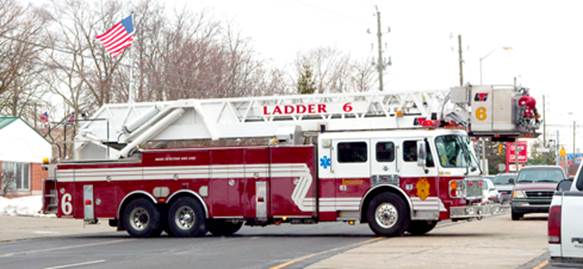
12. Fraudulent Transfer of Funds (01 19 addition)
When covered items are stolen or
given away because of a threat, coverage is available under a variety of crime
coverages. However, if those same items are given away without a threat, there
is no coverage, even if they were given away following instructions that were
accepted as legitimate but turned out to be fraudulent. This newly introduced
endorsement is designed to fill that coverage gap.
Editor’s Note: There are two parts to this coverage. The labeling is
not part of this coverage but is provided as an aid in understanding.
A. Subject to the limit and deductible on the Declarations, coverage is
provided for financial loss to an insured when that loss is a direct result of
either or both of the following:
- Fraudulent instructions to financial institutions
This applies only when an
employee of the named insured performs a transaction that directs a financial
institution to transfer, pay, or deliver out of the named insured’s account or
to debit that account. That employee must perform that transaction based on
fraudulent instructions and must do so while acting in good faith.
- Fraudulent entries into
the named insured’s computer equipment
This applies only when an
employee of the named insured makes an electronic data entry or change to the named
insured’s owned, operated or leased computer
equipment. The entry must result in money, securities or other property being
transferred, paid, or delivered out of the named insured’s account or that the
account be debited or deleted. That employee must perform that entry or change
based on fraudulent instructions and must do so while acting in good faith.
|
Example: Archer is out of the
office working with clients. Patricia, Archer’s admin assistant, received a
call from Archer’s wife explaining that Archer asked her to call because he
was in a meeting. He needed $5,000 transferred from the company account to
the vendor’s account to finalize a deal. Patricia followed procedures and
requested that Connie, in accounting, transfer the funds immediately. Patricia
was very excited to hear all about the deal the next day when Archer walked
in. However, she was not so excited when Archer explained that he had no idea
what she was talking about. This new supplement would respond to this
loss. |
B. A single act may result in several occurrences and may involve
one or more employees. Regardless of the number of occurrences or the number of
the employees the maximum amount paid for a single consolidated financial loss due
to that single act is the limits on the Declarations for this coverage.
Note: The limit on the Declaration is $5,000, and this coverage
does not state that it can be increased. This is a coverage limit NOT a
location limit.
C. The deductible is $500 per
occurrence. The deductible can be changed on the Declarations.
Note: The deductible is per occurrence, but the limit of insurance
is per consolidated financial loss. This could result in multiple deductibles
being applied to that single financial loss.
|
Example: Millie receives an
email request from John to modify some programming. That simple change
results in $25.00 being debited against Barely There’s account every day. The
amount is small and goes unnoticed for months. An audit discovers the charge
and the necessary change in the program made. An investigation leads back to
Millie, who provided the documentation of John emailing her to make the
change. John denies making the request. Further tracking discovers
that John’s email account had been hacked. A claim for fraudulent transfer of
funds is made. The insurance company agrees that coverage applies but does
not pay anything because each debit was a separate occurrence that was less
than the deductible. |
13. Lock Replacement Coverage (01 19 addition)
The expenses the named insured incurs to repair, reprogram or replace locks and keys are paid but only at a
premises described on the Declarations. Coverage applies for door locks and also for lock tumblers and similar types of locking
mechanisms. The reason for the expenses being incurred must be due to a loss or
theft of key cards or door keys.
The limit is stated on the
Declarations. No deductible applies to this coverage.
Part I E Losses Not Insured 3.
Disappearance or Dishonesty Exclusion does not apply to this coverage.
14. Loss of Income from Dependent Property Coverage
A. Coverage C Extension
This coverage insures the named insured’s loss of business income and related expenses that result from a direct covered loss to a dependent property that necessarily interrupts the named insured’s operations or business. Coverage applies up to the limit on the Declarations Supplement.
|
Example: Mowry’s Lawn Equipment has an exclusive contract to sell Best Ever Lawnmowers. Mowry’s income drops dramatically when Best Ever has a fire that shuts down production for six months. This coverage pays for Mowry’s loss of income. |
B. Resumption of Operations
If it is possible for the named insured to resume operations by using materials from another supplier or to be able to sell product through another outlet, the amount that would otherwise be paid under this coverage is reduced. The reduction is based on how much that alternative would reduce the time lost. These alternatives could be partial or entire replacement.
|
Example: Mowry’s Lawn Equipment sells more than just Best Ever lawn mowers. Mowry can order other lawn mowers but decides not to because he worries about the long-term impact in doing so can have on his Best Ever franchise. His decision reduces the amount he receives from his insurance company. |
C. Coverage Period
The time period covered starts when the direct physical loss occurs at the dependent location. It ends when the dependent location should be able to resume operations. The time period is based on what should occur, not on what actually occurs. The time period may be less than what is needed if the dependent property does not use all due diligence and ongoing effort to replace damaged property and resume operations.
|
Example: Best Ever Lawnmower’s president considers the best way to move forward following the fire. He must decide whether Best Ever is better off purchasing another existing plant or repairing the damaged one. He decides to visit several existing plant locations and takes his family with him on many extended vacations. It took him three months to decide to repair the existing facility. Mowry’s insurance company takes the position that Best Ever could have completed all construction activity in five months. However, Best Ever’s three-month delay means construction will take eight months. As a result, Mowry’s carrier pays for only five months of downtime. |
15. Loss of Income from Interruption of Computer Operations (01 19 change)
This coverage is subject to an annual aggregate limit. Annual aggregate means that once the limit is exhausted, coverage ceases.
A. The loss of income the named insured incurs when computer operations are interrupted because of corrupted or destroyed electronic data is covered. The corruption or destruction of the data must be due to one of the specified causes of loss, computer hacking or a computer virus.
Note: Compare the causes of loss under Supplemental Coverages 8 Electronic Data Coverage above with this coverage. The causes of loss in Electronic Data Coverage are direct physical loss that this policy covers. The causes of loss for this coverage are limited to specified causes of loss, computer hacking, and computer virus. This means that a direct damage loss may be covered while the loss of income from the same loss is not.
|
Example: Burglars break into Merydale’s offices and remove all laptop computers and external hard drives. All computer programs were backed up on those hard drives. Some employees had primary information stored on those hard drives instead of on their C drives. The direct damage from the theft is covered. The loss of income is not covered because theft is not one of the specified causes of loss. |
B. Part 1 E–Losses Not Insured, Exclusion 2. Computer Hacking and Computer Virus Exclusion does not apply. However, there is an important exception. There is no coverage if an employee or a party the named insured retains to work on the computer or computer system manipulates the computer, its system, or its data in a way that causes a loss.
C. The special limit on the Declarations Supplement is the total aggregate the insurance company pays for each annual or 12-month policy term. This is not a cumulative limit. In addition, a loss may begin in one year and continue into another. In that case, only the limit in effect at the time the loss began applies.
D. Resumption of Operations
The named insured may be able to resume operations by using other sources. In that case, the amount this coverage pays is reduced to the extent that the named insured can use other available sources for its computer operations. These alternatives can reduce the loss partially or entirely.
E. Coverage Period
The time period covered starts when the computer operations are
interrupted. It ends when the reasonable time period
to restore computer operations ends. The time period
is based on the length of time it should take to resume operations promptly,
not on the length of time it actually takes.
16. Newly Acquired Property Coverages
A. Coverage may be extended to property
the named insured acquires during the policy term. The locations are covered
only if the operations conducted at them are similar to
the business described on the Declarations or will be used as private
warehouses. The amount varies by coverage type as follows:
Coverage A
The maximum amount available is 25% of the limit of liability for Coverage A. In cases that involve multiple buildings, the limit is 25% of the highest limit on the Declarations. The newly acquired property may be an addition to an existing building. In that case, the maximum limit is 25% of the specific property to which the addition is made.
|
Example: Realistic, Inc. has four buildings with the following limits: |
||
|
Building Number |
Coverage A |
Coverage B |
|
1. |
$150,000 |
$75,000 |
|
2. |
$160,000 |
$80,000 |
|
3. |
$170,000 |
$90,000 |
|
4. |
$180,000 |
$100,000 |
|
Realistic purchases a fifth building for $150,000 and builds an addition to Building 1. Only a $45,000 limit is available for the newly acquired building ($180,000 X .25). The maximum available for the addition is $37,500 ($150,000 X .25). |
||
Coverage B
The maximum amount available is 25% of the limit of liability for Coverage B. In cases that involve multiple buildings, the limit is 25% of the highest limit on the Declarations. This applies to the business personal property at a newly acquired location. This does not apply to newly acquired business personal property at an existing location.
|
Example: Realistic purchases $25,000
business personal property for building #5. The maximum limit available is
$25,000 ($100,000 X .25). |
Coverage C
Coverage C is not unlimited like business income coverage in the policy. The maximum that can be applied is the amount available for Coverage A or Coverage B at the acquired location.
Note: This wording does not specify that it is the sum of Coverage A and Coverage B. The ambiguity suggests that that is the case.
|
Example: Realistic has $45,000 + $25,000 = $70,000 limit maximum limits available for building 5 and $37,500 available for the addition to building 1. This means that the maximum available to Realistic for Loss of Income coverage is $70,000 at building 5 and $25,000 for the addition to building 1. |
B. The coverage described above lasts for only 45 days following the acquisition date. This time period is further limited by the policy’s expiration date. The policy may be cancelled or expire before the 45 days after acquisition. In that case, coverage ends on the policy termination or expiration date. In addition, coverage ends when the values of the property acquired are reported to the insurance company.
|
Example: Realistic acquires building 5 on December 15. The policy expires on January 1. Coverage on newly acquired property ends on January 1. As a result, there is no coverage on building 5 if it is not added to the policy at renewal. |
17. Outdoor (Exterior) Signs and Satellite Dish Coverage (01 19 change)
Coverage applies for direct physical loss to outdoor signs and satellite dishes at the described premises. The posts and poles for the sign are also covered. Signs that are interior but considered building or entrance signs are covered even if they are not outdoors. Part 1 D–Property Exclusions/Limitations and Part 1 E–Losses Not Insured do not apply to this coverage except for Exclusion 7. Intentional Loss and Paragraph A. of Exclusion 12. Wear, Tear and Other Specified Causes of Loss Exclusions.
The Part I deductible does not apply.
18. Pollution Clean Up Cost Coverage
A. This very limited coverage applies subject to all of the following:
- A covered cause of loss causes direct physical damage to covered property.
- A pollutant is released onto land or into water as a direct consequence of the covered loss.
- The pollutant emits, escapes, migrates, seeps, or is discharged or dispersed.
- The polluted land or water is on the described premises.
The expenses to remove the pollutants are covered but only if both of the following apply:
- They are actually incurred.
- They are reported in writing to the insurance company within 180 days of the direct physical loss that triggered the pollution event.
The most the insurance company pays is the limit on the Declarations Supplement. This is an aggregate limit that applies during a 12-month period.
|
Example: A fire at Janey’s Picture Framing causes lacquer and paints to discharge into the pond on the premises. Janey spends $7,000 to remove the pollutants. A windstorm just after Janey reopens again causes lacquers and paints to again discharge into the same pond. This time Janey spends $5,000 to remove them. Her pollution aggregate limit is $10,000. Therefore, she is paid $7,000 for the first loss but only $3,000 for the second due to the annual aggregate of $10,000. |
|
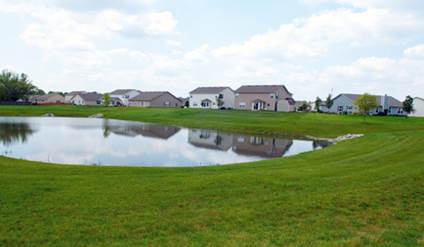
B. This coverage does not pay any costs to extract radioactive or nuclear materials of any kind.
C. There may be a specific deductible on the Declarations Supplement for this supplemental coverage. If so, it applies in place of any other deductible. If not, the policy deductible applies.
19. Trees, Shrubs and Plants Coverage (01 19 change)
Lawns, vegetated roofs, trees that are decorative, shrubs and plants are covered for loss up to the limit on the Declaration Supplement. This is an extension of Coverage A. The loss can be caused by any covered causes of loss except for any of the following:
- Hail
- Ice
- Sleet
- Snow
- Wind
This coverage pays for the loss and any debris removal associated with it.
Note: Debris removal is very important because it covers debris removal of a tree instead of coverage that applies under Supplemental Coverages 8. Debris Removal Coverage. The term “decorative tree” must also be considered. Part 1. D–Property Exclusions/Limitations exclude all coverage for trees, shrubs, plants, lawns, and growing crops except as this coverage provides. However, this coverage insures only “decorative trees.” This policy does not define “decorative tree” and there is no other common definition. This could result in some ambiguity.
This coverage is not an additional amount of insurance. In addition, property held or grown for business purposes is not covered.
Note: “For business purposes” could mean many different things. It appears to be an ambiguous term at best. This is because business purposes are the only reason any commercial enterprise has landscaping, such as to attract clients, increase rents, or enhance property values. This means that this coverage may functionally never apply. It may have a narrower definition that applies only to such items held for sale or to be used in a product to be sold.
20. Valuable Papers and Records Coverage (01 19 change)
Coverage B–Business Personal Property must be provided in order for this coverage to apply.
This
coverage insures the expenses the named insured incurs
to replace or restore valuable papers and records damaged or lost due to a covered
direct physical loss. Covered expenses include the cost of research.
Part I D–Property Exclusions/Limitations does not apply to this supplemental
coverage. Under Part IE–Losses Not Covered, only exclusions 7. Intentional Loss
and 12. A. Wear and Tear apply. The Part 1 deductible on the Declarations also
does not apply.
The most paid for these expenses is the limit on the Declarations Supplement. However, the full coverage B limit is available to pay for the blank forms needed to replace the records or papers and the costs the named insured incurs to copy or transcribe written records. Coverage does not apply to electronic records.
|
|
Example: Graves has a $50,000 Coverage B limit and a $10,000 Valuable Papers and Records limit. A flood causes the following loss: · The records are waterlogged and ruined but can be read and duplicated. It costs $7,000 to transcribe them, and the materials needed to do so cost another $2,000. The $50,000 Coverage B limit applies to this loss. · A few valuable manuscripts are also destroyed. It costs $5,000 to replace them with similar books. The $10,000 Valuable Papers and Records limit applies to this loss. |
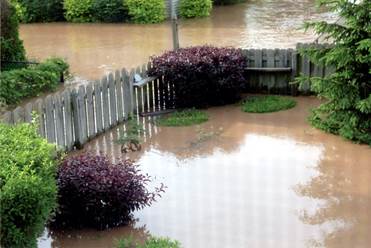
The definition of valuable papers is included in this coverage. The following items plus similar records are considered valuable papers and records:
- Abstracts
- Books of accounts
- Documents
- Deeds
- Manuscripts
Note: Electronic and magnetic media have
been eliminated from the records listing above. (01 19 change)
21. Vehicle Coverage
Coverage B extends to the named insured’s motorized land vehicles under limited circumstances:
- Such vehicles must be on the described premises.
- They must be used to service the premises or the business operations.
Note: The term “principally” is used. This means that vehicles temporarily off premises or that are occasionally being used for purposes other than servicing the premises or business operations are still covered.
Forklifts, lawnmowers, electric carts, and tractors are just a few examples of the type of vehicles covered, but many other types may qualify. The following types of vehicles are excluded:
- Vehicles licensed to be used on public roads
Note: This does not state that the vehicle is required to be licensed. It only states that it is licensed. This means that an unlicensed yard truck that meets all other requirements is covered.
- Vehicles not principally kept at the described premises
- Vehicles specifically insured elsewhere
If there is no Coverage B on the policy, this coverage is an extension of Coverage A when the vehicles are used to exclusively (not principally) for premises service.
There is no additional insurance provided under this coverage.
22. Water Damage/Related Damage Repair Expense Coverage
If a covered Sprinkler Leakage loss or Water Damage loss occurs, the following additional expenses are covered as an extension of Coverage A:
- The cost to repair parts of the building that were damaged in order to gain access and repair the appliances, systems or equipment from which the water was escaping.
- The cost to either repair or replace the part of the item that was allowing the water to escape. This cost must be incurred at the same time the building was being damaged to gain access to that item.
|
Example: John noticed water pooling on the floor. He could hear water but could not identify its location. The plumber arrived and began to look for the problem area. After four unsuccessful attempts, he located the problem area. He replaced the valve but told John more work was needed to prevent a recurrence. The cost to repair all five access points is covered. The cost to replace the valve is covered. The cost to return and repair other objects to avoid a recurrence is not covered. |
There is no coverage if another party is responsible by contract or law to pay these expenses. There is also no coverage to repair or replace any property except for the particular item that caused the water damage.
This coverage is not an additional amount of insurance.
PART I C–LOSSES INSURED
General Cause of Loss Conditions–Coverages A, B, C
A covered loss must be all of the following:
- Fortuitous
- Direct
- Physical damage or destruction to covered property. Theft and damage that accompanies attempted theft are considered physical damage or destruction.
Note: This means consequential loss, such as loss of use, loss of income, spoilage, etc., is not covered except as specifically provided in the policy. An example of covered consequential loss is Coverage C. Loss of Income.
- Caused by a covered cause of loss
|
Example: Marvin and Sons has the following losses:
|
1. Basic Plus Coverage
When the Basic Plus Coverage is selected on the Declarations, only fortuitous direct damage losses from the following causes of loss are covered:
Coverage A
All fortuitous direct damage losses to Coverage A property are covered subject to all of the policy’s other parts and provisions.
Coverage B
The only fortuitous direct damage losses to Coverage B property are those caused by the following. These causes of loss are subject to all policy provisions:
- Hostile Fire
- Aircraft
- Explosion
- Falling Objects
- Glass Breakage
- Lightning
- Riot or Civil Commotion
- Sinkhole Collapse
- Smoke Sprinkler Leakage
- Vandalism
- Vehicles
- Volcanic Eruption
- Weight of Ice, Sleet, or Snow
- Windstorm/Hail
Each of the above listed causes of loss is described in more detail under item 3. later in this Part, except for Fire, Explosion, Lightning, Weight of Ice, Sleet or Snow or Windstorm/Hail, which have no further explanation but are well defined by Common Law and precedent.
Related Articles:
Vandalism, Riot, or Civil Commotion–A Discussion
Windstorm or Hail–A Discussion
2. Expanded Coverage
When the Expanded Coverage is selected on the Declarations, all fortuitous direct losses to Coverage A and Coverage B property are covered subject to all the other parts and provisions in the policy.
Nonowned property is covered for theft damage when the policy includes only Coverage B if the named insured is legally responsible for the property. The nonowned property must either be occupied by the named insured or must contain property of the named insured. This nonowned property theft damage coverage does not include a fire or explosion loss that is directly related to a theft but does cover other such theft incurred damage.
|
Example: Pesky Perks’ lease states that it is responsible for any theft damage to the building it occupies. Connie locks up one evening without realizing that a customer was hiding in a closet. He rummages through the store and picks out the items he wants. He then kicks out the back door as he exits. Coverage B–Expanded Coverage covers both the property stolen and the damage to the back door. |
3. Descriptions of Causes of Loss
The definitions of the causes of loss listed in 1. Basic Plus Coverage above are as follows:
A. Aircraft (01 19 change)
Coverage
applies only for loss caused when an aircraft or any part of an aircraft has direct
physical contact with the covered property. Self-propelled spacecraft and
missiles are considered aircraft. This
cause of loss also includes direct damage to an unmanned aerial vehicle and
parts from it.
Note: This additional wording clarifies
that damage from unmanned aerial vehicles is covered but based on the
definition of aircraft, such damage was already coverage.
|
Example: Paul is surprised when a piece of metal crushes his lawn tractor. An investigation reveals that it fell from a crop duster plane that operated in the area. This would be a covered aircraft loss. |
B. Falling Objects
This is damage to property caused by an object that falls on it. This cause of loss does not include the following losses:
- Damage to personal property that is outdoors and not in a building
- Damage to the interior of a building or personal property inside a building unless the falling object penetrates that exterior portion of the building. The penetration can be through the roof or through a wall.
|
|
Example: A truck strikes a tower next to Joe’s Finer Furniture. The tower and antennas on it fall on Joe’s premises. · The tower crashes through the main building’s roof and damages furniture. This loss is covered. · One of the antennas strikes and damages furniture on display outdoors. This loss is not covered. · Another antenna sails through an open window and destroys a dining room table. This loss is not covered because the antenna entered through an open window, not a wall or the roof. |
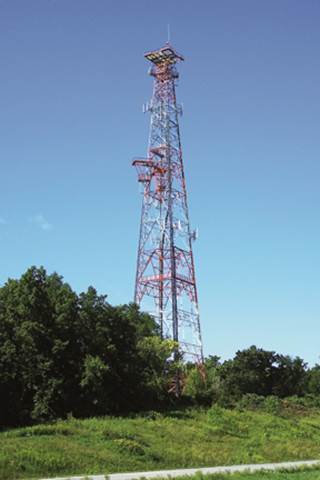
C. Glass Breakage
Glass breakage is damage to other property that occurs when building glass breaks.
|
Example: A gutter detaches from a neighboring building and crashes through the glass in Patrick’s Card Shop. Glass fragments lodge into the carpeting and many cards. The damage to the carpet and the cards is covered as glass breakage. |
D. Riot or Civil Commotion
This is more than riot and civil commotion. It is also both of the following:
- Activities of employees on strike while they occupy the described premises
- Any and all looting that takes place during the civil commotion or a riot
E. Sinkhole Collapse
This is when land abruptly sinks or collapses into underground voids or empty spaces created by water acting against limestone or similar rock. The loss occurs when the collapse damages the property on that land.
This cause of loss does not include collapse or sinking into man-made empty spaces or the cost to fill sinkholes.
Note: Underground mines are an example of man-made empty spaces.
F. Smoke
This cause of loss is for only abrupt and accidental smoke that causes a physical loss.
Note: Industrial smoke pollution and agricultural smudging are examples of smoke that is not covered.
|
Examples: · The smoke from the wildfires causes Malcolm’s store windows to become dirty. This loss is not covered because there is no physical damage to Malcolm’s property. ·
Malcolm’s old vacuum tube radio overheats, and
the smoke it emits soon fills the store. It damages the circuitry in many of
the electronic devices in the store held for sale. This loss is covered
because the smoke was accidental and caused damage. |
G. Sprinkler Leakage
The only damage covered is accidental discharge or leakage from an automatic sprinkler system. This cause of loss also includes collapse of any tank that is part of the system.
H. Vandalism
This is both willful and malicious damage to covered property. It includes damage to buildings that burglars breaking into or out of causes.
It does not include theft losses or breakage of signs and building glass.
I. Vehicles
There are two types of covered vehicle damage.
- The vehicle can make contact with the covered property and damage it.
- The vehicle can throw up an object into covered property and damage it.
There is no coverage if the vehicle doing either of the above is owned by the named insured or is used in the named insured’s business.
|
Examples: · John carries a television to his car. The car slips out of gear and starts to roll towards him. He drops the television and jumps into the car to stop it. The television is damaged because John dropped it. This loss is not covered. ·
A car passing Jim’s Barber Shop clips a piece
of metal on the road and it sails through Jim’s window. The damage the metal caused
is covered as vehicle damage. |
J. Volcanic Eruption
There are only three types of volcanic eruption covered loss:
1. Shock waves or airborne blast
2. Particulate matter, ash, and dust, but only if they cause damage. There is no coverage if they can be removed without causing physical damage.
3. Flow of lava
Note: There is a group of property exclusions in the policy known as Common Exclusions. 1. Earth Movement/Earthquake/Volcanic Activity which excludes all volcanic activity that this cause of loss does not describe.
Each volcanic eruption is not considered a separate occurrence. All activity that takes place over a 168-hour period is considered a single occurrence and a single loss.
K. Water Damage
This cause of loss applies to Coverage A. It also applies to Coverage B if Expanded Coverage was selected on the Declarations.
This cause of loss starts with an appliance, equipment or system breaking or cracking. Water, steam or other liquid type material then must both accidentally and suddenly spew forth.
|
Example: John notices water pooling
on the floor. He can hear the water but cannot determine its location. The
damage the water causes is covered. However, if John allows the water to continue
to drip without acting, the additional damage is excluded because it is no
longer accidental. |
If the system is an automatic sprinkler system, refer to G. Sprinkler Leakage cause of loss.
4. Specified Causes of Loss
The policy will sometimes state that coverage applies to only specified causes of loss. When it does, only the following causes of loss apply:
- Fire
- Aircraft
- Explosion
- Falling objects
- Lightning
- Riot or civil commotion
- Sinkhole collapse
- Smoke
- Sprinkler leakage
- Vandalism
- Vehicles
- Volcanic eruption
- Water damage
- Weight of ice, sleet, or snow
- Windstorm/Hail
It is important to note that this is meant to be a restriction of coverage, not an expansion. Therefore, if the coverage would be increased by this listing, such expansion is excluded.
5. Covered Loss
A. Coverages A and B
The covered loss that is described in General Cause of Loss Conditions–A, B, C above applies.
B. Coverage C
1. Direct covered loss changes based on the
type of Coverage C being provided.
a. When the term is used with Loss of Income coverage, this is the direct covered loss described in the General Cause of Loss Conditions-Coverages A, B, C that occurs at a described premises. The named insured must occupy the premises, and the covered loss must result in loss of income. The occupancy requirement does not apply when Coverage C is loss of Rental Income.
b. When the term is used with Loss of Income from Dependent Property coverage, this is the direct covered loss described in the General Cause of Loss conditions–Coverages A, B, C that occurs at a dependent property.
2. Covered Loss
A consequential loss resulting from a direct covered loss described in 1. above.
PART I D–PROPERTY EXCLUSIONS/LIMITATIONS
1. Property Not Covered
The following property is excluded. There may be exceptions in other parts of the policy. In that case, those exceptions apply but only as specifically described.
A. All of the following are excluded except as provided under Part 1 B–Supplemental Coverages 1. Accounts Receivable and 20. Valuable Papers and Records:
- Bills and accounts
- Deeds and any evidence of debt
- Money, notes, or securities
- Precious metals including, but not limited to gold, and silver
- Valuable papers and records
B. The following property is excluded except as provided under Part 1 B–Supplemental Coverages 17. Outdoor (Exterior) Signs and Satellite Dish Coverage:
- Outdoor (exterior) signs
Note: Supplemental Coverage 17. Outdoor signs is broadened to include signs that are interior but are considered building or entrance signs. That wording is not used here.
- Satellite dishes
Note: Building glass was to be listed under item B. above in the prior edition.
It was removed with the 01 19 edition.
C. Creatures. The common definition of this word applies because it is not otherwise restricted. One common definition of creature is any animal. It provides some restrictions to nonhumans. Another definition is more expansive because it states that a creature is any animate being. This item has an exception for insured stocks of animals.
Note: A client’s business personal property may include items in this category. In that case, it is important to have the underwriter clearly describe in writing what covered property is and what it is not.
D. The following are usually excluded because a covered loss to them is unlikely:
· Land and the cost of the work that goes into moving the land for excavation, grading and general land preparation.
· Driveways, walks, and other paved surfaces
· Water
· Docks, wharves, piers, and pilings
· Retaining walls that are not part of a building
· Drains, pipes, and flues that are below ground level
· Foundations that are below ground level
· Foundations that are below the subsurface of the lowest basement
Note: Because this property is
excluded, the client can remove their values when determining insurance to
value. This can significantly reduce the premium.
E. Electronic data. (01 19 change)
There are two exceptions:
· Coverage provided under Part 1 B–Supplemental Coverages 8. Electronic Data Coverage
· Prepackaged software but only if it is considered the named insured’s stock.
|
Example: An electrical short causes a fire at Mary’s Office Services. The computers are all damaged, and all data and programs on them are destroyed. There is no coverage because of this exclusion. The good news is that all of the prepackaged software she kept as stock for her customers is covered, and a limited amount of coverage for this is available under Part I B–Supplemental Coverages 8. Electronic Data Coverage. |
F. Any property that this policy does not describe
This is a very broad statement. If a type of property is not described within the policy, it is not covered. This provides a large opening for an insurance company to deny coverage. A narrower restriction would have been for property not listed on the Declarations to not be covered. It is very important to review the property described in Coverage A, Coverage B and the Supplemental Coverage because all other property is not covered.
|
Example: Keith lists three buildings on his policy. A fire occurs at a fourth building he owns but forgets to include at policy inception. There is no coverage for any damage at that building. |
|
G. Any property classified as Coverage B property that is insured, more specifically insured elsewhere in this policy or under any other policy.
|
Example: The store fixtures are bolted to the floor and are considered permanent. This property could be insured under Coverage B but are not because they are specifically insured under Coverage A. |
Note: It is very important that property values be assigned to the coverage under which they will be adjusted. Correctly assigning property insured under Coverage B to Coverage A could result in lower premiums and broader coverage under Building Code/Law Enforcement and Debris Removal.
H. All trees, shrubs, plants, lawns, and growing crops. This property is not required to be outdoors, so landscaping and indoor plants are also excluded. There is an exception under Part 1 B–Supplemental Coverages 19. Trees, Shrubs, and Plants Coverage.
|
Example: The Exquisite Office Tower has a large indoor garden that contains small decorative trees, shrubs, and plants. When smoke from a small fire destroys the plants, the only coverage available is under Part 1 B–Supplemental Coverages 19. Trees, Shrubs, and Plants Coverage. The good news is that Exquisite’s insurance agent took this garden into consideration and worked with the underwriter to increase the Trees, Shrubs, and Plants limit to $25,000 and the per item limit to $2,000. As a result, this loss is covered. |
I. Vehicles (01 19 change)
The following vehicles are not covered except for those that are under the control of the named insured for the purpose of selling, servicing, or repairing them:
- Aircraft
- Unmanned aerial vehicles
- Land vehicles that are motorized
- Watercraft
The equipment, motors, accessories, parts and trailers that are part of any of the above are also not covered.
The only exception is provided in Supplemental Coverage 21. Vehicle Coverage.
|
Example: Bill decorates his retail clothing store, Fly with Me, with aircraft parts and accessories. He turns in a claim when thieves steal what he considers decorative items. He is disappointed to find that coverage does not apply to them because aircraft parts and accessories are not covered property. |
2. Property Restrictions–Coverage B
The following restrictions apply only to Coverage B property that is otherwise insured and considered covered property. These restrictions apply only when the cause of loss is other than a specified causes of loss.
A. Breakage
Glass is not covered for breakage. Fragile items that are similar to glass and items that are glass type are also not covered for breakage. There are exceptions to these restrictions. Photographic and scientific lenses are covered. Bottles and similar type containers are also covered.
B. Furs
The limit on the Declarations Supplement–Property Restrictions–Furs is the most paid for all loss in a single occurrence to furs and garments trimmed with fur.
|
Example: A fire sweeps through My Ladies Clothing store. The damage to the fur-trimmed items is covered without restriction because the loss is due to one of the specified causes of loss. |
C. Jewelry
The limit on the Declarations Supplement–Property Restrictions–Jewelry is the most paid for all loss in a single occurrence to the following property:
- Jewelry, jewels, and pearls
- Semi-precious and precious stones
- Watches. This also includes watch movements.
- Precious metals in any form. This includes bullion. It also includes gold and silver.
The only exceptions are watch items or jewelry items valued at less than the Value Waiver Limit on the Declarations Supplement.
|
Example: The loss at Fly with Me in a previous example was not limited to only aircraft parts and accessories. Jewelry and clothing were also stolen. The loss of that property was covered but limited as follows:
|
PART I E–LOSSES NOT INSURED
Note: Also review the Common Exclusion–Parts I and II Section towards the back of this policy. That section has the earth movement, war and nuclear exclusions.
This policy does not insure direct or indirect losses caused by any of the following. The loss is excluded even if it occurs concurrently with a loss that would have been covered or if that other loss contributed to the loss.
The only exceptions are the ones that the policy specifically provides.
Related Article: Concurrent Causation and Anti-Concurrent Causation Clauses–A Discussion
1. Building Law Exclusion
When laws that regulate construction, repair, demolition, or removal of debris are enforced a financial loss can occur because the building owner may be required to tear down undamaged property, change an existing structure, or incur additional costs in order to rebuild within the law. This policy does not cover any of these or similar actions except for the coverage provided under Part I B–Supplemental Coverages 3. Building Code/Law Coverage.
|
|
Example: Kittly’s is a 50-year-old masonry building in downtown Middlebury. A tornado damages over 60% of the building. Kittly’s applies for its building permit but is informed that it must tear down the undamaged portion of the building and rebuild the entire structure with masonry noncombustible construction. Kittly’s must also upgrade to existing ADA requirements. There is no coverage to tear down the existing structure, for the value of the 40% undamaged structure, the upgrade to masonry noncombustible construction, or the upgrades to meet ADA requirements except for the limited amount that Part 1 B–Supplemental Coverages 3. Building Code/Law Coverage provides. |
2. Computer Hacking and Computer Virus Exclusion
This excludes any loss due to computer hacking or a computer virus. The only exception is provided under Part 1 B–Supplemental Coverages 8. Electronic Data Coverage.
3. Disappearance or Dishonesty Exclusion (01 19 change)
There is no coverage for property that mysteriously disappears or for property that is missing without any explanation. This exclusion applies to inventory shortages as well as money and securities. Shoplifting, pilfering, and appropriating property is also excluded.
|
Example: Magda performs an inventory once a month. Her March inventory reveals that $15,000 of stock is missing. She does not know where it went, but it is not on her shelves. It is like the stock just vanished! This loss is excluded. |
Losses caused by dishonest, criminal, or fraudulent acts are excluded only if committed by the named insured, other insureds, its directors, employees, partners, or trustees. These losses are also excluded if committed by any entity that has possession of the property. The only exception is loss to property while it is in a hired bailee’s possession.
|
Example: Magda knows that stock cannot simply vanish. She begins her own investigation. She confronts her store manager based on the evidence she developed, and the manager confesses. The loss is still excluded because of this exclusion. However, there is coverage under Part 1 B–Supplemental Coverages 10. Employee Dishonesty Coverage. |
4. Electrical Damage Exclusion (01 19 change)
Coverage does not apply to any loss caused by artificially generated electrical currents going to or through any of the following:
- Appliances
- Devices
- Wiring
- Computer hardware
- Computer components
- Computer equipment
There is an exception. A fire loss resulting from such an excluded loss is covered. However, the fire loss must not be excluded elsewhere in this policy.
|
|
Example: A circuit breaker is faulty and allows the coffee maker to overheat. The coffee maker is destroyed. The heat causes the filters sitting next to it to ignite. The damage to the circuit breaker and coffee maker is not covered. The damage to the filters and any other damage due to the fire is covered. |
5. Explosion of Steam Equipment Exclusion
If the named insured owns or is in control of steam boilers, engines pipes or turbines, there is no coverage when they explode. There are two exceptions.
- There is coverage if a fire or other explosion results from the excluded explosion, but only if the fire isn’t excluded in the policy. The coverage is limited to only the losses from the fire and the other explosion – not the original explosion.
- If gas or fuel explodes inside the combustion chamber, flue or firebox of the above described equipment causing a loss, that loss is covered.
|
Examples: The steam boiler in the Sherwood Forest Office Building explodes. · Maureen’s Bakery is directly above the boiler and is damaged when part of the boiler that explodes penetrates the floor. Maureen’s loss is covered because Maureen does not own, operate, or control the boiler. · The boiler is destroyed, and the basement walls are heavily damaged. The ceiling above the boiler and Maureen’s Bakery floor is also damaged. The Sherwood Forest Office Building policy does not cover any of this damage because it owns the boiler. · The explosion causes a fire in Maureen’s Bakery that spreads to three other occupants in the building. The Sherwood Forest Office Building policy pays for the building damage that results from the fire. |
6. Flood/Flooding Exclusion
The following are not covered. They are not covered if caused by natural forces. They are not covered if caused by human forces. They are not covered if they result from rain, snow, wind or other weather conditions. They are not covered if caused by any other covered cause of loss.
- Flooding
- Surface water
- Waves
- Storm Surge
- Tidal water or waves
- Streams or other bodies of water overflowing
- Spray from any of the above
There is an exception. There is coverage for a fire loss that results from such an excluded loss if the policy does not otherwise exclude the fire loss.
7. Intentional Loss Exclusion (01 19 change)
If a loss occurs because of an action by any insured, there is no coverage if the intent of that insured was to cause a loss. This also applies when someone else acted under the direction of an insured.
An exception applies if the loss occurred in the course of reasonable force being used to protect people or property.
|
Example: A fire damages John’s Candy Store. Scenario 1: John placed a candle next to combustible material, intending to start a fire. The fire damage is excluded. Scenario 2: John always kept candles burning in his store. He was called away on a family emergency and did not put them out before he left. The fire damage is covered. Scenario 3: Sally is John’s business partner. She places a candle next to a combustible intending to start a fire. John does not know about her plan. The fire damage is excluded because Sally is an insured. Scenario 4: John is working late and always keeps candles burning in his office as he works. He hears someone breaking into the store. He calls 911 just before the burglar charges at him. John grabs a candle and throws it at the burglar to stop the charge. The burglar’s clothes catch fire, and the candle drops on top of papers catching them on fire. All fire damage is covered because John’s intentional act was reasonable force used to protect himself. |
|
|

8. Leakage from Frozen Equipment Exclusion
There is no coverage for any leakage or overflow damage that occurs when both of the following conditions exist:
- The building is unoccupied or vacant
- Plumbing, heating, air conditioning, or other equipment or appliances freeze
Damage to the plumbing, heating, air conditioning or other equipment or appliances that result from the freezing is also not covered.
There are two exceptions. Coverage applies when either of the following preventative measures is taken:
- Care is taken to maintain adequate heat in the building
- Water in all appliances is drained, and the water source is shut off
|
Example: Pauline leaves the country for a six-month mission trip. She suspends operations at the Dairy Barn during her absence. She stops all utilities except for heat. She sets the heat at a low temperature and asks her friend Jeff to check the premises from time to time. A severe storm damages the local utility extensively, and all power is off for seven days. The building’s pipes thaw and burst when the power is restored. This loss is covered because Pauline took reasonable steps to maintain heat in the building. |
Related Court Case: Water Damage from Frozen Pipe Covered: Frozen Plumbing Exclusion Did Not Apply
9. Loss of Use or Delay Exclusion
There is no coverage for damages the named insured sustains because it cannot use or sell property. There is also no coverage because the named insured must delay activity.
10. Power, Heating, or Cooling Failure
When there is a loss due to any loss of utility services, there is no coverage. There is also no coverage if a loss results from a power, heating or cooling failure. When a change in temperature or in humidity causes a loss, there is no coverage.
|
Example: The sweltering heat causes the electrical grid to overload, and Mainville loses all power. Quincy’s cash registers, lights, air conditioning, and refrigeration fail to operate. The following losses that Quincy sustained are not covered:
|
|
There is an exception under Part 1 B–Supplemental Coverages 4.B. Business Property Coverages–B. Consequent Loss Coverage (Spoilage).
11. Water Damage Exclusions
A. Coverage does not apply to loss due to sub-surface, underground, or surface water that flows, leaks, or seeps through or exerts pressure on any of the following:
· Basements
· Doors, windows, or other openings
· Walls
· Driveways
· Floors
· Foundations
· Sidewalks or other paved surfaces
· Swimming pools
Note: This exclusion does not exclude mudflow and mudslide. However, mudflow and mudslide are excluded in Part 1 E–Losses Not Insured 12. Wear, Tear, and other Specified Causes of Loss Exclusions.
B. If any type of water or sewage back up through a sewer or a drain, any loss or damage resulting from that backup is excluded. In addition, if water or sewage overflows a sump and causes damage, there is no coverage.
There is an exception to both A. and B. above. If any excluded water damage losses cause a fire, sprinkler leakage, or a theft loss to occur, coverage applies to the fire, sprinkler leakage, or theft loss.
|
Example: Surface water inundates a
small business district. Investigators cordoned off the area for a week while
determining what caused the problem. During this time, thieves wearing
official looking uniforms steal a number of items
from Paul’s Pharmacy. The water damage loss is excluded, but the loss of the
items stolen is covered. |
If the term BU 50 02 is listed on the Declarations as an endorsement, paragraph 11.B of this exclusion does not apply.
If the term BU 50 03 is listed on the Declarations as an endorsement, coverage is provided as though paragraph 11.B. of exclusions did not apply but only up to the limit for Water Damage – Sewer/Drain Backup on the Declarations.
Note: These are called Trigger Endorsements. Instead of attaching an extra piece of paper called BU 50 02 or BU 50 03, the wording that would be on those endorsements is built into the policy. This is unique to MSO policy writing.
Related Article: MSO Businessowners Policies Trigger Endorsements
12. Wear, Tear, and Other Specified Causes of Loss Exclusions
One of the specified causes of loss may result from any of the following exclusions. If it does, then the damage due to that cause of loss is covered. However, if a collapse results from paragraph B. or paragraph E., there is no coverage for any of the collapse damage.
Related Court Case: Anti-Concurrent Causation (ACC) Clause in Insurance Contract Barred Recovery
A. This paragraph excludes several causes of loss:
· Wear and tear
· Animals (domestic only), birds, insects, raccoons, rodents, vermin.
|
|
· Pollution and contamination. This is a far-reaching exclusion. It gives examples of what is excluded but uses the term “not limited to.” In addition to the example of release, seepage, etc., of pollutants being excluded, it also states that all costs associated with government directives to respond to pollutants, fungi, mold, asbestos, mold, or lead contamination are also excluded. There is an exception under Part 1 B–Supplemental Coverages 17. Pollution Clean Up Cost Coverage.
· Corrosion
· Deterioration
· Decay
· Errors, omissions, or deficiencies in design, materials, plans, or workmanship
· Disease
· Dry rot or wet rot
· Natural growth such as, but not limited to, fungi, mold, spores, mildew, and bacterium
· Inherent vice, but only if the vice is common to that property
· Latent defect provided that it was part of the property’s original condition and lead to the loss
· Mechanical breakdown
· Rust
B. This particular item may appear to apply to only building, but it also applies to business personal property. Any damage that is due to buckling, bulging, contraction, cracking, expansion, settling, shrinkage or sinking is not covered.
C. Property may be contaminated by a virus or a pathological agent. In that case, both the damage to the property and the cost to respond to any governmental directive with respect to that contaminated property is excluded.
To be excluded, the pathological agent or virus must have the potential to cause disease in animals, humans, and other creatures. This means that such agents or viruses that may harm only vegetation are not necessarily excluded.
D. There is no coverage when water leaks or seeps continuously or repeatedly because of a problem or condition in an appliance or system that the named insured knew about but did not take steps to repair.
Note: This is a very open-ended exclusion. It does not state the number of events that are considered “repeatedly” or how the number of days that the event has to occur in order for such leakage or seepage to be continuous.
E. Movement of land, ground, or earth either on the earth’s surface or beneath it is excluded. Such movement can be due to natural events or man-made ones. This exclusion applies to the following events but is not limited to just them:
· The collapsing of land, ground, and/or earth, except for sinkhole collapse
· Pressure
· Rising
· Shifting
· Sinking
· Sliding
· Subsidence
· Landslide
· Mine subsidence
· Mudflow/mudslide
· Rockslides/falls
Note: This is not the only earthquake/earth movement exclusion. Common Exclusions–Parts I and II. 1. Earth Movement/Earthquake/Volcanic Activity is the other.
F. Damage to personal property caused by marring or scratching
G. Coverage does not apply to smog (a combination of vehicle and industrial emissions) or to smoke when produced by agricultural or industrial operations.
13. Weather/Related Exclusion
A. Coverage B
These
three exclusions apply only to Coverage B–Business Personal Property:
1. Loss that occurs because of temperature changes or extremes. Also, loss caused by the atmosphere being damp or dry.
2. When only Basic Plus Coverage applies, there is no coverage for damage to business personal property that is inside a building when that damage is caused by hail, ice, rain, or snow entering that building. However, coverage does apply if the elements enter that specific building through openings in the exterior walls or roof created by any covered cause of loss.
3. When business personal property is outdoors there is no coverage for any loss caused by any of the following:
· Freezing
· Rain
· Hail
· Ice
· Sleet
· Snow
There is no coverage even if the property is only outdoors for a short time. If at the time of such a loss the property is outdoors, it is not covered.
B. All Property
The following weather condition exclusions apply to all covered property:
1. Drought
2. Any and all other weather conditions that are not drought. This part of the exclusion applies only when such conditions contribute with an event, condition, or cause that this policy otherwise excludes.
Note: This is an anti-concurrent causation exclusion.
Related Article: Concurrent Causation–A Discussion
A cause of loss that this policy covers that damages covered property may result from 1. or 2. above. If so, coverage applies but only for the resulting damage form that covered cause of loss.
14. Hot Water/Steam Equipment Exclusion
A. Hot Water Boilers
Hot water boilers and other equipment that is used to heat water are not covered for any loss caused by an occurrence within the boiler or equipment or because of its condition. The only exception is if an explosion causes a loss.
B. Steam Equipment
Steam boilers, engines, pipes or turbines are not covered for any loss caused by an
occurrence within the boiler or equipment or because of its condition. The only
exception is a loss caused by an explosion of gas/fuel that occurs inside the
firebox, combustion chamber or a flue of the boiler or other equipment.
15. Unauthorized/Voluntary Transfer of Property
A. Unauthorized Transfer
Any loss that occurs because property is given or transferred to others based on false instructions or instructions that were not authorized is not covered. The false instructions can be transmitted in any manner. However, the transfer is excluded only if it is to a place that is not the described premises.
B. Voluntary Transfer
Property that is given to others voluntary but is the result of the giver being induced to do so by false pretense of any kind of fraudulent scheme, device or trick is not covered.
PART I F–OPTIONAL COVERAGES
The optional coverages are not modifications or extensions of any provision in the policy except for those items specifically addressed in the particular selected optional coverage.
The options apply to this policy only if listed on the Declarations.
1. Burglary and Robbery Coverage (01 19 change)
Note: This coverage is not needed when Expanded Coverage is provided for Coverage B.
This optional coverage insures the named insured’s loss due to burglary or robbery to the following property:
A. Business personal property coverage as Coverage B. There is no sublimit, so the full limit on the Declaration for all other causes of loss applies to a burglary or robbery loss.
B. Money or securities that the named insured uses in its operations. There is a sublimit, and that is the amount on the declarations. One limit is needed for On premises and another for Off premises.
1. On Premises
Money and securities are covered while either within the premises described on the Declarations or within a bank. If it is within a premises that is similar to a bank the money and securities are also covered.
Note: A key word is within. The money and securities must not only be on the premises but must be within that premises. This would mean that money and securities outside an owned structure or outside the particular tenant occupied space would not be on premises.
2. Off Premises
Money and securities are covered while being carried. They can be carried by the named insured, a partner, an officer with authorization to do so or an employee. It is covered only if it is being taken from one on premises location to another on premises location, such as from the named insured’s office to the bank. Coverage also applies at stops the person makes in route or at his or her living quarters, provided the living quarters is not the final destination.
Note: The coverage is provided when money and securities is in route. A question must arise as to how long the money and securities can remain in the living quarters and be considered in route. Another question would be whether or not the person carrying the items must remain with them at all times for there to be coverage.
C. This optional coverage is subject to
a $200 deductible. Another deductible
amount can be entered on the Declarations.
D. This optional coverage is available only when Coverage B. is subject to is Basic Plus Coverage.
|
Example: Juanita is attacked and the deposit she had prepared taken from her. Scenario 1: The attack occurs within her office suite. This is covered as on premises burglary and robbery. Scenario 2: The attack occurs in the building common hallway leading to the elevator. This is covered as off premises burglary and robbery. Scenario 3: The attack occurs in Juanita’s home. This is covered as off premises burglary and robbery but only if the deposit was enroute to the bank. Scenario 4: The attack occurs in Juanita’s bank. This is covered as on premises burglary and robbery. |
2. Outdoor (Exterior) Building Glass Coverage
Outdoor building and entrance glass at the described premises is covered. Coverage also applies to encasing frames, lettering, and ornamentation.
The glass can be owned by the named insured. If the glass is nonowned but is located in an area the named insured occupies or controls, that glass is also covered.
The following expenses are also covered, but only if they are incurred because of a covered loss:
- Boarding up damaged openings
- Temporary repairs
- Temporary plate glass
- Removing obstructions in order to repair the glass
The term “exterior” is substituted for the term “outdoor” when insuring building glass and entrance glass.
|
Example: Patty’s Make up Mart is located within the Fashion Mall. The store has two plate windows that face the interior of the mall. These are considered exterior glass and are covered. |
Direct physical loss to the glass is covered. All exclusions under Part I E–Losses Not insured are removed except for 7. Intentional Loss Exclusion and 12. A. Wear, Tear, and Other Specified causes of Loss Exclusions. There is no deductible.
Note: The three Parts I and II Common Exclusions continue to apply.
PART I G–SPECIAL PART I CONDITIONS
1. Duties when Loss/Danger of Loss Occurs
These duties are not only imposed on the named insured. The named insured, any other insured and anyone who would benefit from this coverage must do the following:
A. Report the Loss
Immediate notice must be given to the insurance company. If a violation of the law has occurred, the police must also be immediately notified.
As soon as possible (as opposed to immediately) the insurance company must receive more details such as how, when and where the loss occurred.
B. Protect Property
It is the responsibility of the named insured, other insured and beneficiaries to protect property. They must do so if the property is in imminent danger or if a loss has occurred and property needs to be protected from further loss. Examples of post loss protection are the boarding of windows and other openings and temporary repairs. These expenses will be paid by the insurance company provided they are both reasonable and necessary.
The named insured is responsible and obligated to take steps to prevent damage at its own expense. Once the named insured, its employees or others who operate with authority of the named insured are aware of a condition that could lead to a loss, they must take reasonable maintenance, construction or repair action to prevent such a loss. A number of examples are provided with a statement that all such situations could not be listed. Overall, the named insured must be a responsible tenant and/or building owner. Roofs must be repaired, leaks must be stopped, floor supports must be put in place as needed, etc.
When neglect adds to the cost of a loss, that additional cost is not covered under this insurance policy. Other insurance or the named insured will need to pay.
C. Cooperation on the Loss
The insurance company has the following requirements that must be performed if a loss occurs. These must be performed multiple times but only if the requests to do so are reasonable.
1. Damaged and undamaged covered property must be available for the company’s examination or inspection. Samples of such property may be taken by the insurance company for examination.
2. The following records and documents must be provided to be examined and/or copied.
· Inventory (See D. below)
· Accounting procedures
· Affidavits
· Books of accounts
· Bills
· Contracts
· Deeds
· Documents
· Evidence
Note: This is not described and appears to be very open-ended. Anything is potentially evidence.
· Financial records
· Invoices
· Liens
· Leases
· Receipts
· Records
· Tax returns
· Vouchers
· Other sources of information or facsimiles that the insurance company finds acceptable
Note: This is also not described and appears to be very open-ended.
3. All must be willing to be examined under oath and to have that examination videotaped. Each statement must be signed by the person giving the statement. If there are multiple statements to be taken, the insurance company can interview each person separate from the others.
4. Cooperation is expected as the insurance company investigates or settles any claim.
D. Inventory
An inventory must be prepared if the insurance company requests it. When the inventory is submitted it must be signed. The inventory must include both damaged and undamaged property and the following information for each item:
· Age
· Description
· Quantity
· Actual cash value (if property is valued this way)
· Replacement cost (if property is valued this way)
· Source
Note: This is not defined or explained. It could mean the party that provided the valuation.
· Amount of loss claimed
The damaged property is to be separated from the undamaged so that the insurance company can inspect it. The policy states that the set aside property is to be placed in an orderly manner for easy inspection.
E. Statement of Loss/Proof of Loss
A statement must be submitted to the insurance company. It must include the information described in items C.2. and D. above but additional information may be requested provided it is reasonable. This information will be used to determine the following:
· Coverage
· The insurance company’s liability
· Amount of loss
· Scope of the loss
· Specifications of the buildings that were damaged
The statement must also include repair estimates. All details supporting the estimate are to be submitted.
Only when specifically required by the insurance company, a signed and sworn proof of loss must be submitted within 60 days of the request. The proof of loss must include the following:
· All information described in preceding paragraphs
· All information described in the paragraphs above
· Other reasonable information such as:
- Time of loss
- Cause of loss
- The named insured’s interest in the property
- The interest of any and all other parties that have an interest in the property. This includes all encumbrances.
- Any and all insurance policies that apply to the loss
- Details of any changes that took place during the policy period with respect to occupancy, title to, or use of the property
If any of the policy conditions are not complied with, the insurance company’s obligations under this policy may be altered or become totally void.
2. How Losses Are Settled
A. Limits of Liability
The following items must be evaluated. The smallest of the three is the insurance company’s liability:
1. The replacement cost or the actual cash value of the property at the time of loss. Which one is used is based on the valuation selected on the Declarations. However, this is further limited. The amount cannot exceed the lesser of the following:
· The cost to repair or replace the property with like kind and quality at the described premises and intended for the same use
Note: This is not a requirement that the building be built at the described premises or that the occupancy be the same occupancy. It is only limiting the payment amount to what it would cost to rebuild at the premises with the same occupancy.
|
Example: Presley Office Supplies has two retail locations and one warehouse location. The warehouse location is damaged by a covered loss. Presley wants to use the money from that loss to relocate and change it to a retail occupancy. Its costs are: Cost to rebuild the warehouse structure at the existing premises $120,000 Cost to furnish the warehouse occupancy at the existing premises $50,000 Total: $170,000 Cost to build/purchase a retail location $200,000 Cost to furnish the retail location $100,000 Total: $300,000 The insurance company
will pay no more than $170,000, so Presley will need to pay the additional
$130,000. |
· The actual amount spent to repair or replace the property. This applies even if the actual cash value is higher.
2. The limit of insurance on the Declarations or the Declarations Supplement that applies to the loss.
3. The named insured’s insurable interest or the interest of the mortgagee on the Declarations.
B. Deductible
The insurance company pays the amount of loss in a single occurrence that exceeds the deductible amount on the Declarations. Coverage C is not subject to a deductible.
C. Bases of Settlement
1. Replacement Cost
Losses under Coverage A and Coverage B are based on replacement cost valuation unless stated otherwise elsewhere in the policy. An important limitation to this valuation is that it applies only if the replacement is made at the described premises. This requirement MAY be waived by the insurance company. One reason it may be waived is that a building law will not allow the building to be rebuilt on the premises. Other reasons may be submitted to the insurance company, and if acceptable to it, replacement cost will be provided even if rebuilt off the described premises.
The company is not required to pay replacement cost until the repair or replacement is completed. The only exception is when the total cost of the repair or replacement is less than the replacement threshold on the Declarations Supplement.
The named insured can settle the claim on an actual cash value basis first and then request payment on a replacement cost basis after the repair or replacement is complete. The replacement cost claim must be made in writing no later than 180 days after the actual cash settlement. The insurance company may have offered to settle on an actual cash value basis, and the named insured rejected the offer. In that case, the 180-day time limit begins on the date the company offered to settle on an actual cash value basis.
2. Actual Cash Value
Replacement cost is the standard valuation for Coverage A and Coverage B. However, there are types of property and situations when the loss is settled based on the covered property’s actual cash value at the time of loss. There are a number of considerations when developing the actual cash value, and the Glossary section of this policy defines them.
3. Money or Securities
The insurance company does not pay more than the smaller of the following for any covered loss that involves money or securities:
· The actual cash value of the money or securities at the time of the loss
· The equivalent cost to replace the money or securities. The securities value is determined by the insurance company based on the market value of the securities at the time of settlement.
Note: Setting the valuation of securities based on its market value at the time of settlement instead of the time of loss could be detrimental to the named insured and is different from the ISO method that values a securities loss based on its market value as of the time of loss.
When there are multiple locations covered, the off premises limit is not cumulative. This means that the maximum off premises loss is the limit on the Declarations, not a multiple of it. The on premises location limit also cannot be accumulated.
4. Tenant’s Improvement and Betterments
If the named insured pays to replace or repair the improvement or betterments it has made in a building it occupies as a tenant, a settlement based on either its actual cash value or replacement cost will be made. The standard valuation is replacement cost but may be actual cash value if so stated on the Declarations or elsewhere in the policy.
If the named insured does not pay to replace such improvements or betterments, the settlement is based on a pro rata of the actual expenses the named insured paid for them. The pro rata factor is determined by considering how much time is left on the lease and when the improvements and betterments were added.
D. Abandonment of Property
The insurance company has the right to decide when it will take property as salvage. No one can force the insurance company to accept property no matter where the property is or the state it is in.
E. Appraisal
1. The insurance company and the named insured may negotiate but be unable to agree to values and/or the amount of a loss. In that case, either party can request an appraisal to establish the amount or the value of the loss. Each party then has 30 days to select an independent and competent appraiser and then notify the other party of its selection.
2 An umpire is then selected. The appraisers must work together and select an umpire they both consider to be independent and competent. They have 15 days to do this. If they cannot agree, either party may request that the court of record in the jurisdiction select the umpire.
3. The appraisers must establish the values or the amount of loss, but they have only a reasonable amount of time to do so. If they cannot, they submit only the differences to the umpire. Any agreement that any two parties agree to in writing establishes the value or the amount of loss.
4. The cost for this condition is outside the limits of the policy. As a result, each party pays its own expenses and the cost of its own appraiser. They split the cost of the umpire.
5. This condition establishes only values and the amount of loss. It does not establish coverage. This means the insurance company can still deny the claim even after the appraisal process.
F. Loss to a Portion of a Pair or Set of
Articles–Coverage B
1. One or more portions of a pair or set may be damaged or sustain loss. In that case, it is not considered a total loss unless the remaining parts do not have any use value, and it is unlikely that the portion that remains can be repaired or replaced.
2. When the insurance company does agree that the loss is a total loss, the remaining portions of the set or pair must be given to the insurance company prior to any payment. This applies only if the insurance company requests the remaining portions.
Note: There is no proportional adjustment if a set loses part of its value but not all of it. This means that the set’s value is not taken into consideration unless it is a total loss. A table with four chairs is not a total loss when one chair is damaged. That one chair is valued as only a single chair. It is not the difference between the value of the complete set and the value of the set with only three chairs.
G. Our Liability and Satisfaction of Your
Loss
This policy’s limit of insurance may not fully satisfy the named insured’s loss. In that case, the named insured can seek coverage under another insurance policy or absorb the loss itself.
This policy’s limit of liability is not reduced when a loss is paid unless such limit is subject to an aggregate.
H. Our Options in Settling Losses–Coverages
A and B
Note: This is a condition of “mays.” It explains what the insurance company may do when settling claims but never says exactly what it “must” do.
1. The insurance company may pay the loss with money.
2. All or part of the property may be repaired or replaced according to policy provisions. The insurance company may take all or any part of the property based on a value or appraisal that both parties approve.
The insurance company must inform the named insured of the approach it will take within 30 days of receiving a proof of loss and accepts liability for the loss.
3. The claim may be settled with the named insured. It may also be settled with a loss payee when the loss payee is named in the policy. It may also be settled with any other who has a legal claim to payment. If the property belongs to others, it may adjust the loss directly with the property owners. Once those owners are satisfied, any claim the named insured has for that property of others is satisfied.
The insurance company has the right to conduct and control the defense if legal action is brought against the named insured because of a claim. The cost of the defense is within policy limits and not outside them.
Note:
This means that every dollar of defense reduces the limit of liability to
satisfy any claim by a dollar.
I. Recovery of Covered Property
Note: This condition gives the named insured all of the options.
Either the named insured or the insurance company may recover lost property after the company settled the loss. In that case, the named insured has two options:
· It can keep the settlement and let the insurance company keep the property that was recovered.
· It can take the recovered property and return the payment it had received.
It is important to note that the named insured is required to notify the insurance company of the recovery.
J. When Loss Becomes Payable/Payment to
Others
1. The insurance company must pay a covered loss within 30 days of it reaching a written agreement with the appropriate parties or of an award being filed with it according to policy conditions. Paying the loss does not reduce the amount of insurance available to pay future losses.
2. The insurance company decides how it pays other parties that have an interest in the loss. These parties can be any of the following:
· Governmental entities
· Mortgagees
· Secured parties
· Others with contractual, legal, or statutory loss payable rights
The insurance company may make a joint payment to all parties. It also has the option to not pay a loss assignee that the named insured has not given an assignment of loss.
3. The insurance company can negotiate with and pay an insurance trustee named in the policy. Payments are made only for the interests represented in the policy.
3. Other Special Conditions
A. Mortgagee Clause
Mortgagees named on the policy receive the benefits outlined in this condition. They are covered for loss but only to the extent of their interest in the property and in the order of their precedence, such as first mortgagee, second mortgagee, etc. The order of listing on the declarations does not alter that precedence.
This condition also applies to trustees and secured parties named on the policy when they comply with the following policy conditions.
Coverage is provided only if the mortgagee:
1. Notifies the insurance company immediately of any of the following of which it becomes aware:
· Ownership change
· Occupancy change
· Foreclosure proceeding
· Increased hazard
2. Pays the premium the insurance company demands if the named insured does not
3. Provides proof of loss within 60 days of the date the insurance company requests it if the named insured does not
4. Surrenders its rights of recovery against others that may be liable for the loss. However, doing so does not impair its rights to receive its insurance claim.
5. Allows the insurance company to receive full assignment of the mortgage after it pays the loss. The insurance company must satisfy other mortgage requirements in order to gain the assignment and also receives any collateral securities that accompany that debt.
Note: This means that the insurance company becomes the named insured’s new mortgagee if it decides to pursue the full assignment.
This insurance protects the mortgagee’s interest even if the insurance company denies the named insured’s claim.
Common Conditions has a special cancellation clause for mortgagees.
B. No Benefit to Bailee
The insurance this policy provides is not for the benefit of any party that has custody of the named insured’s property for a fee or some other form of payment. This includes carriers for hire.
C. Vacancy, Unoccupancy, and Other Increase
in Hazard
1. The coverage this policy provides is suspended after a covered building is vacant for 60 consecutive days. A vacant building is one that no longer has contents usual to its occupancy. Buildings in the course of lawful construction or being renovated are the only exception to this condition.
Note: The policy does not define lawful construction or explain what it is.
Related Court Case: Sprinkler System Renovation in Building Did Not Render It Occupied: Vacancy Exclusion Applied
2. The coverage this policy provides is suspended after a covered building is unoccupied for 60 consecutive days. The one exception is that the building is not considered unoccupied during seasonal time periods when the building is customarily closed.
3. The coverage this policy provides contemplates the hazards described on the application. Coverage does not apply during the period of time in which hazards within the named insured’s control increase. Coverage also does not apply if the named insured allows others to control the premises in its absence and those others increase the hazard. There is an exception. Lawfully done building alterations, maintenance, repair, or construction are not considered an increase in hazard unless they change the use of the premises.
4. Increase in hazard includes any changes that impact any of the following:
· Use of the premises
· Rates for this insurance
· The insurance company’s willingness to accept the risk. One example is a breach of a requirement that the parties agree to as a condition for the company to write the risk.
· Conditions the underwriter established to write the risk
· Physical conditions required for the specific hazard
· Protective safeguards either required or for which a premium consideration was given
· Circumstances related to the insurance company’s accepting of the scope of coverage, causes of loss, and/or amount of insurance.
PART II A–MAIN LIABILITY COVERAGES
Application of This Insurance (Part II)
Insurance under this policy applies to liability but only if it comes from either:
- The named insured’s premises
- The named insured’s operations or business
The premises, operation, or business must be stated on the Declarations or elsewhere in the policy for coverage to apply.
The liability coverage is provided only as described and limited in the policy.
New premises, operations, and businesses the named insured acquires or forms during the policy period are covered but only as limited within the definition of insureds in Common Glossary–Parts I and II. All provisions that apply to the named insured’s stated business, operations, and premises also apply to the new acquisitions unless the policy states otherwise.
The policy explains the insurance company’s obligations. It is not obligated to insure, service, or pay anything else.
Coverage E-Liability to Others
A. The insurance company pays only if the insured is legally liable for bodily injury or property damage that is insured under this policy. The insurance company pays for the benefit of insureds, not just the named insured. The amount paid is subject to the limits of liability that are shown on the Declarations.
There are time and place considerations as to the bodily injury and property damage as follows:
1. The occurrence which caused the bodily injury or property damage must take place within the coverage territory. The coverage territory is defined under Common Conditions–Parts I and II 6. Coverage Territory.
2. The bodily injury or property damage must occur during the policy term.
3. The bodily injury and/or property damage may have started prior to the policy term and still be covered, but only if no insured and no employee who is authorized to provide or receive notice of claims is aware of it. If the bodily injury and/or property damage had started prior to the policy term, an insured or authorized employee was aware, and it continued into the current policy, the loss is considered a continuation from the prior policy term and not covered under this policy term.
The term damages used in conjunction with bodily injury that this policy insures is more than just bodily injury to the injured party. It includes claims others make for care, death, or loss of services that result from that bodily injury.
B. This policy covers continuation of bodily injury or property occurring in the current policy term and continuing or resuming after the policy expires, but only if either of the following applies:
· The bodily injury or property damage did not begin prior to the current policy term.
· The bodily injury or property damage began prior to the current policy term, but no insured or authorized employee knew about it.
C. It is very important to understand when bodily injury or property damage is known to have occurred. This is because that date determines the policy that pays the loss. It is the earliest time of the following when any insured or employee authorized to receive or give notice of either a claim or occurrence:
· Reports bodily injury or property damage to the insurance company that writes this policy or to any other insurance company. The report may be for only a part of the bodily injury or property damage or for all of it.
· Receives a demand, claim, or suit for damages due to bodily injury or property damage. The demand, claim, or suit may be verbal or written.
· Determines that bodily injury or property damage has occurred or is occurring. This could be anything that indicates a loss.
D. The insurance company does not pay any damages that this insurance policy does not cover. It also does not pay any amounts of covered loss beyond this policy’s limits of liability.
Coverage F–Medical Payments to Others
A. Medical expenses incurred by others that arise out of an accident are covered. The expenses must be reasonable, necessary, and reported to the insurance company within three years of the date of the accident. Either the named insured or the person who benefits from the payment can report the expenses. Payment is limited to the limit of liability on the Declarations.
This coverage applies if the accident takes place within the coverage territory and during the policy term as defined in Common Conditions. It also applies if the accident occurs on the premises due to either of the following:
· A condition that is at the named insured’s premises
· Business or operations that are insured by this policy
There is no requirement to establish fault or legal liability in order for this coverage to pay. This also means that the insurance company that pays the medical expenses does not admit that any insured is liable for the injury. If bodily injury from the accident would be covered under this policy, medical expense is covered. This means that if the bodily injury would not be covered under the policy, the medical expense is also not covered.
B. The only expenses paid under this this coverage are the following:
· Services for:
o Ambulance
o Dental
o Funeral
o Hospital
o Medical
o Professional nursing
o Surgical
o X-ray
· Prosthetic devices
· Drugs
· Surgical supplies
PART II B–SUPPLEMENTAL COVERAGES
There are no changes to any of the policy provisions because of any of the following supplemental coverage. The only exception to this statement is if a change is specifically stated in the Supplemental coverage, but that change applies only to that particular Supplemental coverage.
1. Defense Coverage
A. The insurance company defends suits brought against insureds. This is not an unconditional statement. The damages sought must be for covered bodily injury, property damage, or personal/advertising injury. The insurance company selects the legal counsel that defends.
There will be no investigation and/or defense for any claim or insured when:
· Suits are asking for damages that are not covered by this policy.
· Allegations brought within a suit are not covered by the policy.
· The insurance company has paid judgments and settlements to the point that the limit of liability has been exhausted.
B. The insurance company determines the claims it settles and suits it defends. Its decisions must be reasonable.
Note: This means that even if an insured believes a defense should be provided in order to protect its reputation, the insurance can proceed with the settlement. The only recourse for the insured is to take over the defense and relinquish its right to insurance coverage.
C. The insurance company pays a number of defense costs. These costs are outside the limits of liability available to pay claims. They are paid only if the insurance company defends a suit, and the expenses are part of that suit.
· Costs the insurance company incurs
· Interest that accumulates starting when a judgment is entered and ending when the insurance company pays, offers to pay, or deposit, with the court, the amount of the judgment amount that is within the limit
· Prejudgment interest levied against any insured on the part of the judgment the insurance company pays. There is an exception. The company does not pay interest starting from the time it offers to pay its limit of liability.
· Costs the court taxes against the insured
· Costs of appeal bonds or bonds to release attachments. These costs are limited to the bond amount within the limit of liability. This means the insurance company will pay up to one amount, and the insured will be responsible to pay the amount that exceeds the limit of liability. The insurance company is not required to supply the bonds or find a market that does so.
· Expenses the insured incurs at the insurance company’s request. This includes up to $250 per day for loss of earnings while it assists the insurance company.
Note: The insured may decide to show up at court every day. However, the $250 applies only on the days when the insurance company requests that he or she appear.
The term suit is broadened to include alternative dispute resolutions proceedings under either of the following circumstances:
· The insured is required to submit to the proceedings
· The insured chooses to submit to the proceedings with the insurance company’s prior written approval
2. Contractual Coverage (01 19 change)
A. This Supplemental Coverage extends only Coverage E–Liability to Others. If the named insured has assumed the liability of another, coverage is extended for the assumed and covered bodily injury or property damage but only for the following written or oral contracts:
Item 1
· A required agreement to indemnify a municipality. The requirement must be due to a law or ordinance. It does not include any agreement that is entered into because of work being performed for the municipality except as provided under Item 2. below.
· Easements. Easements involving work that is on a railroad or within 50 feet of the railroad are not included. Any assumption of such railroad-type risk is also not included within Item 2. below.
· Premises lease or elevator maintenance agreement. Fire or explosion damage that is part of a premises lease is not included in this item.
· Sidetrack agreement
Item
2
Any contract in which the named insured expressly assumes another party’s tort liability. However, the bodily injury or property damage must be partially or completely caused by the named insured or by other parties that act on its behalf. The extent of the liability is limited to the amount the named insured, or other parties that act on its behalf contributed to the bodily injury or property damage.
This item does not apply to contracts described in item 1. above. It also does not apply to tort liability that a law imposes when there is no contract.
Related Court Case: Teacher's Alleged Negligence on School Trip Deemed Covered
B. Part II C–Liability Not Covered 2.
Automobiles/Aircraft/Watercraft and
Unmanned Aerial Vehicles / Drones Exclusion does not apply to any contract
described in Item 2. above that pertains to maintaining, using, or owning aircraft,
watercraft or unmanned
aerial vehicles.
C. The only contracts this Supplemental Coverage insures are ones entered into because of the described premises on this policy or ones connected with the named insured’s business/operation that this policy covers. Only bodily injury or property damage that occurs after the contract is executed is covered.
3. Employers Liability for Nonowned Automobile Coverage
A. This Supplemental Coverage extends only Coverage E–Liability to Others. Bodily injury or property damage that arises from nonowned automobiles being used in the named insured’s business is covered. Coverage also applies to loading and unloading such vehicles. However, the coverage provided applies only as follows:
1. Use can be by anyone who has the named insured’s permission to do so. This is limited to only nonowned four-wheel private passenger automobiles, station wagons, or a four- or six-wheel van of a private passenger type.
However, there is no coverage under this supplemental coverage if the named insured, its partners, and the household members of the named insured, or its partners use the nonowned vehicle.
2. The named insured’s employees occasionally and infrequently using a nonowned truck type vehicle. Such vehicles must be designed to do both of the following:
· Carry goods or materials
· Travel on public roads
Note: Using the word “designed” means that the truck could be used for any purpose, including off public roads.
B. The following are not considered insureds under this Supplemental Coverage:
- When a partner, executive officer, or a member of their households owns the nonowned automobile, that partner or executive officer is not an insured.
- The owner of any nonowned automobile. The agent of the owner and the employee of the owner are also not insureds.
C. This coverage applies only when primary automobile liability insurance is provided under another policy carried by others or by the named insured.
If the term BU 50 04 is listed on the Declarations as an endorsement, this Supplemental Coverage does not apply.
Note: This is called a Trigger Endorsement. Instead of attaching an extra piece of paper called BU 50 04, the wording that would be on that endorsement is built into the policy. This is unique to MSO policy writing.
Related Article: MSO Businessowners Policies Trigger Endorsements
D. Glossary
This Supplemental Coverage defines a nonowned automobile as one with the following characteristics:
- Not owned by the named insured
- Not leased or hired directly by the named insured or by anyone on behalf of the named insured
- Not registered in the named insured’s name
- Not loaned to the named insured unless they are loaned to the named insured by any of the following:
o The named insured’s employees
o The named insured’s executive officers
o Partners
o Members of the household of any of the three above described groups
4. First Aid Expense Coverage
Medical expenses that are reasonable and incurred as first aid to others because of an accident and administered at the time of the accident are covered. The only exception is if this policy excludes the bodily injury.
Note: This is not stated as an extension of Coverage E or Coverage F. It also is not mentioned within the limit of liability. This ambiguity could mean that the entire limit of liability applies to this Supplemental Coverage.
5. Incidental Alcoholic Beverage Coverages (01 19 change)
Part II C–Liability Not Insured 1. Alcoholic Beverage Exclusion eliminates coverage for most situations where alcoholic beverages are used, served, or furnished. This Supplemental Coverage extends Coverage E–Liability to Others to cover bodily injury or property damage that arises from the named insured permitting the following activities but only if no license is required for the activities:
- Serves, furnishes or gives away alcoholic beverages but makes no charge for the beverages.
- Allows others to bring such beverages
on the premises without a charge and permits those beverages to be
consumed on the premises.
If the term BU 50 05 is listed on the Declarations as an endorsement, this Supplemental Coverage is expanded. Coverage is provided even if a charge is made for the alcoholic beverages or others are allowed to bring such beverages on the premises for the purpose of consumption. This exception applies only if the alcohol-related activities are minor or incidental to the named insured’s business/operations. The named insured’s operations cannot be the distribution, manufacture or sale of alcoholic beverages.
Note: This is called a Trigger Endorsement. Instead of attaching an extra piece of paper called BU 50 05, the wording that would be on that endorsement is built into the policy. This is unique to MSO policy writing.
Related Article: MSO Businessowners Policies Trigger Endorsements
6. Incidental Automobile Coverage
This Supplemental Coverage extends Coverage E–Liability to Others. It covers bodily injury or property damage that arises from the following:
A. The parking of any automobile on the named insured’s premises. The automobile being parked cannot be borrowed by, owned by or rented to any insured.
B. The operating of any of the following but only if they are permanently attached to an automobile:
- Air compressors, generators, pumps
- Equipment used to clean buildings, for geophysical exploration, lighting, spraying, welding, or well servicing
- Devices used to lower or raise workers. An example is a cherry picker.
C. Operating a device that is permanently attached to mobile equipment. However, coverage does not apply if the mobile equipment is subject to compulsory or financial responsibility laws or similar motor vehicle laws in the state where it is principally garaged.
7. Incidental Fire and Explosion Legal Liability Coverage
This Supplemental Coverage extends Coverage E–Liability to Others and applies to only property damage. It has its own limit of liability on the Declarations that is shown next to Fire and Explosion Liability.
A. Property damage that arises from a fire or explosion at a premises that is not owned by the named insured but is either rented to or occupied by it is covered by the Supplemental Coverage.
B. If the term BU 50 08 is listed on the Declarations as an endorsement, coverage also applies to property damage from any direct physical loss that is fortuitous and occurs at a nonowned premises that is either rented to or occupied by the named insured.
Note: This is called a Trigger Endorsement. Instead of attaching an extra piece of paper called BU 50 08, the wording that would be on that endorsement is built into the policy. This is unique to MSO policy writing.
Related Article: MSO Businessowners Policies Trigger Endorsements
8. Incidental Medical/Professional Liability Coverage
This Supplemental Coverage extends Coverage E–Liability of Others. It does not apply to any insured or indemnitee of an insured in the business or profession of supplying medical services, nursing services, drugs, or medical supplies.
Coverage applies to bodily injury that arises because the named insured provides incidental medical services, nursing services, drugs, or related supplies, but only if both of the following apply:
- The service is provided for the benefit of others
- No charge is made for the service
|
Example: Great Ice Cream Shop is selling ice cream at a local community market event. Marcia, an employee, watches as Jerry trips and falls. Marcia has a first aid kit and rushes out to help. She applies ointments and bandages that appear appropriate, and Jerry appears to be well when he leaves. Marcia is quite surprised to receive a notice that Jerry is suing Great Ice Cream and Marcia because of an allergic reaction to the ointment and bandages. Great Ice Cream Shop’s Incidental Medical Malpractice will cover Great Ice Cream Shop but not Marcia. |
|
9. Incidental Mobile Equipment Coverage (01 19 change)
This Supplemental Coverage extends Coverage E–Liability of Others. Coverage applies to bodily injury and property damage that arises from owning, maintaining, using, loading, or unloading mobile equipment.
Note: The definition of mobile equipment was moved to the Glossary section in 01 19.
10. Incidental Watercraft Coverage
This Supplemental Coverage extends Coverage E–Liability of Others. Bodily injury and property damage that arises from any of the following is covered:
A. Watercraft that is both ashore and on the named insured’s premises. This does not include premises the named insured has sold, transferred to others, or abandoned.
B. The direct action of the named insured results in the occurrence. The watercraft cannot be owned by, loaned to or rented to any insured. Direct action does not extend to supervision of others or the entrusting of watercraft to others.
C. Watercraft that is less than 26 feet long and is not owned by the named insured, but only if no fee is charged if it is used to transport people or cargo.
11. Personal Injury/Advertising Injury Coverages (01 19 change)
A. The insurance company pays only if the insured is legally liable for personal injury or advertising injury that this policy insures. It pays for the benefit of all insureds, not just the named insured. The amount paid is subject to the limits of liability shown on the Declarations.
The commission of the offense that causes the personal injury or advertising injury must take place:
· Within the coverage territory or it may take place through an electronic means of communication such as the internet. The coverage territory is defined within Common Condition 6. Coverage Territory.
· During the policy term.
The only advertising injuries covered under this policy are those that arise from an offense committed when the named insured’s business/operations’ goods, services or products are being advertised. The business/operations must be covered under this policy.
The personal injuries covered under this policy must:
· Arise from an offense committed while the named insured’s business /operation is being conducted. Those business/operations must be covered under this policy.
·
Not be related to advertising, telecasting, broadcasting or publishing on the named insured’s part or on
its behalf.
B. Liability Not Insured (Additional
Exclusions)
The
following exclusions apply to the coverage this Supplemental Coverage provides.
Coverage does not apply if the damages or liability are direct or indirect, partially or wholly, caused by, result from, or are aggravated
by any of the following:
Personal Injury/Advertising Injury
Exclusions (01 19 change)
1. There is no coverage for injury arising from material that is published, orally, in writing, or electronically if all of the following apply:
· An insured or someone acting under the direction of an insured published the material
· An insured or someone acting in the direction of an insured knew the material was false or that it violated the rights of another.
· The insured or someone acting at the direction of an insured knew the publication of the material would inflict injury.
2. There is no coverage for injury arising from material that is published, orally or in writing or electronically, if the initial publication of the material was prior to the policy term.
3. If professional advice or service is rendered and injury occurs, there is no coverage for that injury. This applies even if the injury occurred because the professional advice or service should have been rendered and was not.
4. When an insured assumes liability in any manner (implied, explicit, oral or written), there is no coverage for injury relating to that assumed liability. There is an exception if the liability would have been covered without the assumption of liability.
5. When the injured party is the named insured, its members or its partners.
6. When any insured hosts, owns or exercises control over an electronic bulletin board, social media, chat room or blockchain, there is no coverage for injury that arises from them.
Note: This applies only when the insured hosts, owns or controls. Coverage remains for those who utilize these products and services.
7. Injury that is due to methods used to mislead current or potential customers of others through the unauthorized use of the other’s name or product in any of the following is not covered:
· The named insured’s email address
· The named insured’s domain name
· The named insured’s metatag
· The named insured’s social media pages
Methods not described above but similar to them are also not covered. This extra item is needed because technology changes.
. Advertising
Injury–Additional Exclusions
8. If an injury results from a breach of contract, there is no coverage. There is one exception. If it is a breach of an implied contract there is coverage, but only when the breach is related to the misappropriation of an advertising idea.
|
Example: Kelly is thrilled with her great advertising idea about her favorite clothing store, Manny’s Fashions. She is so happy with the product and her idea that she e-mails it to Manny’s. She receives a reply thanking her for her support. She is shocked when she sees a commercial three years later that incorporates her idea! She sends another email requesting recognition and compensation. Manny’s refuses. Kelly sues it for breach of contract. Manny’s insurance company defends Manny because of this exception. |
9. If an injury occurs because goods, products or services do not meet the quality or performance that is advertised, there is no coverage for that injury.
10. When the injury is a result of the advertised price of any goods, products or services not being described accurately, there is no coverage.
|
Example: Jessie’s Appliance Shop’s advertisement should have indicated ten notebooks for $1.00 per notebook but indicated ten notebooks for $1.00 instead. Jessie is sued for false advertising when she refuses to honor the advertised price. Her insurance company refuses to defend her because of this exclusion. |
11. An injury that arises from offenses an insured in any of the following businesses commits is not covered:
a. Telecasting, broadcasting, advertising, or publishing
b. Website design for others. This also includes determining website content.
c. Providing service, content, access, or content for the Internet
C. Glossary (01 19 change)
Advertising Injury is only the following:
1. Infringing on copyright, slogan, title, or trade dress
2. Misappropriating (in other words, stealing) ideas related to advertising or the way business is done
3. Publishing material in oral, written or electronic form that does either of the following:
· Libels or slanders an organization or a person
· Belittles an organization or person’s goods, products, or services
4. Publishing material in oral, written or electronic form that violates a person’s right of privacy
Note: This item does not mention violating an organization’s right of privacy.
Personal Injury is only the following:
1. Mistaken imprisonment, detention, or arrest
2. Deliberately spiteful prosecution
3. Publishing material in oral, written or electronic form that does either of the following:
· Libels or slanders an organization or a person
· Belittles an organization or person’s goods, products, or services
4. Publishing material in oral, written or electronic form that violates a person’s right of privacy
5. This item applies only when the landlord, owner, or lessor of the premises commits any of the following acts or has others commit them on its behalf:
· Wrongfully enters any private premises a person occupies
· Wrongfully evicts a person from a private premises he or she occupies
· Wrongfully invades a person’s right of private occupancy of his or her private premises
Wording added with respect to this coverage
(01 19 change)
The terms advertising injury and personal injury do not include bodily injury or property damage.
|
Example: Gratings, Inc. makes a public statement that their prior CEO, Jessica, was released because of deviant behavior. Jessica’s family deserts her, and she is shunned by her industry. Although she denies all such allegations, she becomes depressed and attempts suicide. The suicide is not successful, but the medical expenses are significant. After therapy, she stabilizes and sues Gratings for personal injury and the bodily injury caused by the attempted suicide. Gratings, Inc.’s insurance carrier will pay to defend and indemnify the personal injury but not for the bodily injury. |
The only exclusions in Part II C–Liability Not Insured that apply to Personal Injury/Advertising Injury are:
5. Data Breach
6. Electronic Aggression
7. Employees,
Employment, and Related Injury
9. Fungi/Mold
11. Pollution/Environmental Damage
14. Silica
15. Unmanned Aerial Vehicles/ Drones
A statement is then added that personal injury/advertising injury does not include or extend coverage for any expense, liability, damage, or loss that Coverage E–Liability to Others specifically excludes.
Note: This final statement appears to
be attempting to eliminate coverage that may be argued as covered due to one or
more of the items not specifically excluded in this item but that are excluded
in Part II C – Liability Not Insured.
PART II C–LIABILITY NOT INSURED
The following list of exclusions apply to liability, damages, costs, or expenses. The exclusions apply if the liability, damages, costs or expenses are direct, indirect, in whole, or in part. The exclusions apply even if they aggravate or result from a covered loss that occurs concurrently or sequentially. The only exceptions are those stated in the specific exclusion.
1. Alcoholic Beverage Exclusion (01 19 change)
Bodily injury and property damage due to any of the following alcoholic beverage activities is excluded:
- Contributing to the intoxication of any person
- Furnishing alcoholic beverages to any person who is either under the legal drinking age or under the influence of alcohol
- Selling, distributing, giving, or using alcoholic beverages in violation of laws, ordinances, or regulations that govern them
There is also no coverage for any claim
that is due to allegations of:
·
Wrongdoing
or negligence in the hiring, training, supervision, monitoring or hiring of
others
·
Providing
or not providing transportation to a person who is thought to be under the
influence of alcohol.
These are three exceptions under Part II B–Supplemental Coverages 5. Incidental Alcoholic Beverage Coverage.
Note: It is important to note that this exclusion applies to all entities, not just the ones that furnish, serve, sell, or manufacture alcoholic beverages.
2. Automobiles/Aircraft/Watercraft Exclusions
Bodily injury or property damage due to an automobile, aircraft, or watercraft that any insured owns or operates or has loaned or rented to it is not covered. Bodily injury or property damage due to the loading or unloading of any of them is also not covered. This exclusion applies at all times, including when they are loaned to, used by, operated by, maintained by, rented to, or entrusted to others, regardless of the level of supervision.
This
exclusion also applies to bodily injury or property damage caused by items
attached to such automobiles, aircraft, or watercraft. Examples of such items
are devices, equipment, machinery, parts, trailers, and semi-trailers.
There are a number of exceptions provided under Part II–Supplemental Coverages 3. Employers Liability for Nonowned Automobile Coverage, 6. Incidental Automobile Coverage, and 10. Incidental Watercraft Coverage.
3. Business Activities/Business Risk Exclusions
A. Property damage to the named insured’s work or product is excluded when any part of the named insured’s work or product causes the damage.
There are two exceptions for damage to the named insured’s work.
· There is coverage if, at the time of the loss, the work was not yet complete and had not been abandoned.
· There is coverage if the damaged work or the work the damage arose from was done by a sub-contractor who was working on the named insured’s behalf.
There are no exceptions for damage to the named insured’s products.
B. Property damage because the property is impaired but not damaged is excluded if either of the following causes it:
· The named insured’s product or its work is inadequate, deficient, defective, or in a dangerous condition.
· The named insured or parties that act on its behalf either delay or fail to meet contractual agreements or terms.
There is an exception. When a sudden accident to the named insured’s work or product occurs after it has been put to its intended use causes other property to be unusable, the loss of use of that other property is a covered loss.
|
Example: The old switch for the Print
By Demand printing press is removed and replaced by
a new Switching Places switch. It works but after two days of operating
satisfactorily, it suddenly shorts out for no apparent reason, making the
printing press inoperable. Print By Demand is unable to use the press for
five days as they await a new switch. The loss of use claim Print By Demand brings against Switching Places is covered. |
C. There is no coverage if the named insured’s product, its work, or any impaired property must be recalled. This applies regardless of the party that makes the recall or why the recall is made. The costs, expenses, liability, and loss from a recall due to the product or work being dangerous, defective, deficient, or inadequate are specifically excluded.
Note: Coverage may apply if the named insured did not recall the items and a loss occurred unless otherwise excluded. This exclusion clarifies that the insurance company does not pay for a recall, even if doing so may be to its advantage.
Recall is more than just asking that the product, work, or impaired product be returned. It is also any of the following:
· Adjusting, replacing, repairing, removing, withdrawing, and loss of use.
· Marketing and legal representation, communication, shipping and postage costs and material when associated with a recall.
D. Property damage in the following situations is excluded except for liability assumed under a sidetrack agreement:
· The named insured may work on a part of real property and damage it. In that case, there is no coverage for that particular part of the real property. This applies whether the named insured or a contractor or sub-contractor working on its behalf does the work.
· The named insured may work on a part of property that must be repaired, replaced, or restored because the quality of the workmanship was poor. In that case, there is no coverage for that part. This does not apply to property damage included in the products/completed operations hazard.
E. Bodily injury that arises from any of the following is excluded:
· Body massage
· Chiropody
· Cosmetic
· Ear piercing
· Services or preparations for weight reduction or slenderizing
· Sun or tanning lamps and similar devices
F. Bodily injury that arises from any of the following is excluded:
· Body or skin piercing
· Tattooing or dyeing the skin
· Permanent cosmetic or make-up applications or injections
G. Glossary
Impaired property is not the named insured’s products or its work. It is tangible property that cannot be used or is less useful because of either or both of the following:
· The named insured’s product or work that is a part of the property is deficient, dangerous, inadequate, or defective. Once the named insured’s product/work is replaced, restored, adjusted, or removed, the property can be restored to its previous useful condition.
· The named insured has not satisfied the terms of an agreement or contract with respect to the property. The property can be restored to its previous useful condition once that agreement or contract is satisfied.
4. Contractual Liability Exclusion
There is no coverage for bodily injury or property damage for which the insured is liable to pay damages because it assumed liability in an implied, verbal, or written contract. There are two exceptions:
- If Part II B–Supplemental Coverages 2. Contractual Coverage applies. However, coverage still does not apply to damage to a premises loaned or rented to the named insured unless fire or explosion is the cause of loss. There is also no coverage if the bodily injury or property damage first occurred before the contract was in effect.
- If the contract provides liability for damages that would have been covered without the existence of the contract that liability remains covered.
5. Data Breach Exclusion (01 19 addition)
Bodily injury,
property damage, advertising injury or personal injury that is due to a data
breach is not covered.
All expenses, losses, liability or costs that
the named insured or any others incur when due to a data break. This includes all of the following but also any other loss, expense
liability or costs that are data breach related:
·
Notification
costs
·
Expenses
related to credit monitoring
·
Forensic
expenses.
Note: These are the expenses to track down
the cause of the breach.
·
Expense
of public relations
6. Electronic Aggression Exclusion (01 19 addition)
Bodily injury,
property damage, advertising injury or personal injury that is due to electronic
aggression is not covered. This applies if the damage or injury arises out of
the aggression, was caused by or was a result of that aggression.
Note: This applies regardless of who carries out the aggression.
|
Example: Nadine started receiving what she perceived as
threatening notices on Facebook after she placed her first order with
Middling Fair.com. She decides that the notices are directly related to that
order. She is unable to sleep due to the notices and regularly writes to Middling
Fair.com, pleading that they stop tormenting her. Finally, she sues Middling
Fair for bodily injury and personal injury related to this aggression.
Middling Fair’s MSO BOP will not respond to the allegation or offer any
defense. |
7. Employee, Employment, and Related Injury Exclusions
A. There is no coverage for any of the following (and similar) obligations any insured may have:
· Disability benefits
· Unemployment compensation
· Workers compensation
B. Bodily injury to the named insured’s employees when the injury is directly related to their employment by the named insured is not covered.
C. Bodily injury and personal injury due to any of the following are not covered. These are usually referred to as employment-related injuries:
· Employment-related acts, omissions, policies, or practices. This includes harassment, humiliation, discipline, demotion, coercion, evaluations, discrimination, and reassignments, but is not limited to just these.
· Refusal to employ
· Ending or discontinuing employment
D. Bodily injury and personal injury is not covered in the following employee-related situations:
· Injuries a brother, sister, child, parent, or spouse receives because of an injury of an employee as described in Exclusions B. and C. above
· This restricts who is an insured. If an employee injures the named insured, its partners, members or a fellow employee during the course of his or her employment by the named insured that employee is not an insured under the policy.
|
Example: Patricia and Maurice work for Dandylion, LLC. Patricia spreads a malicious rumor about Maurice. Maurice sues both Patricia and Dandylion, LLC. Patricia is not an insured in this situation, so there is no coverage under Dandylion’s policy. |
E. The insurance company does not share with or pay any damages to others who must pay because of bodily injury described in Exclusions B., C., or D. above.
Exclusions B., C., D., and E. apply regardless of who brings the suit and whether or not it is brought because the named insured is liable as an employer or in another capacity. There is an important exception. Exclusion B. above does not apply to liability assumed in a contract under Part II B–Supplemental Coverages 2: Contractual Coverage.
8. Endangerment or Harm Exclusion (01
19 change)
Coverage does not apply to bodily injury or property damage that is due to an act of an insured that is willfully harmful or that it knows will endanger others. This exclusion applies regardless of whether or not that insured intends or expects such bodily injury or property damage.
This does not apply when such actions are taken in
order to protect persons or property.
9. Fungi/Mold Exclusion
A. The insurance company does not insure bodily injury, property damage, personal injury, or advertising injury caused by or that results from fungi. Coverage is excluded if absorption of, existence of, exposure to, contact with, inhalation of, ingestion of, or the fungi simply being present causes the loss.
B. The insurance company does not insure any loss, expense, cost, or liability that arises out of any of the following:
· Request, directive, order, or demand that any insured or others address or assess fungus or its effects in any way
· Claims or suits by any governmental authority (or on its behalf) for reimbursement or damages due to any response to fungus or its effects in any way
There is one exception. No part of this exclusion applies to bodily injury that results from ingesting products, foods, or goods that are intended for humans to consume.
Note: You might call this the mushroom
exception!
10. Mobile Equipment Exclusion
In order to understand this exclusion, it is important to review the definition of Mobile Equipment in the Glossary and Part II B–Supplement Coverages 9. Incidental Mobile Equipment Coverage.
Coverage does not apply to bodily injury or property damage due to any of the following:
A. Mobile equipment that Part II B–Supplemental Coverages 9. Incidental Mobile Equipment Coverage does not insure.
B. The transporting of mobile equipment by an automobile that any insured owns, operates, borrows, or has rented to it, even if this policy otherwise covers such mobile equipment.
Note: The auto policy that insures the automobile that transports such mobile equipment should cover such mobile equipment being transported.
C. Mobile equipment used in pre-arranged stunt activities, or racing, demolition, or speed contests or while preparing or practicing for them. This applies even if the policy otherwise covers such mobile equipment.
11. Pollution/Environmental Damage
Exclusion
A. There is no bodily injury, property damage, advertising injury or personal injury that arises from pollutants. This can be from any of the following, whether actual, alleged or threatened:
· Discharge
· Dispersal
· Emission
· Escape
· Flowing
· Leakage
· Migration
· Release
· Seepage
This also applies to other similar forms of environmental damage.
This exclusion applies regardless of where any of these events take place or how they take place.
There is an exception. Paragraph A. does not apply to bodily injury, property damage, advertising injury or personal injury when caused by products of combustion that arise from the named insured’s premises. They must be soot, smoke, heat or fumes and must not result from the burning of pollutants. If the fire is a controlled fire, the following conditions must be met in order for this exception to apply:
· The materials being burnt must be usual for a building material fire.
· The fire itself must be part of business, industrial, manufacturing or processing activities
· The particular site, premises or location where the controlled fire is located must never have been used by anyone to dispose of, handle, process, store or treat waste.
B. There is no coverage for treatment, containment, monitoring, detoxification, removal, testing, cleanup or neutralization of pollutants costs, expense liability or loss for either of the following:
· Demand, directive, request or order to the insured or others
· Claim or suit by a government authority for reimbursement
12. Premises/Other Property Additional
Exclusions
The following exclusions apply only to property damage coverage. This means that bodily injury, personal injury and advertising injury coverage is not excluded.
A. Personal property that the named insured borrows or that any insured has in its care, custody, or control. This exclusion does not apply to liability assumed in a sidetrack agreement.
|
Example: Scenario 1: Jerry’s Shoes employs John. John’s brother asks him to store some items in the backroom of Jerry’s while he is on vacation. John agrees but finds all of the items missing when he comes to work one day. He discovers that a store supervisor came in during the night and cleaned out to make room for a new shipment of shoes. John’s brother sues for the value of the lost items, but the insurance company denies coverage because the items were in an insured’s care, custody, or control. Scenario 2: John borrows his brother’s game system to use as a store display. However, the system is stolen, and his brother submits a claim. Coverage may apply if no other exclusion applies because John borrowed the system, not Jerry’s Shoes. |
B. Coverage for property damage that arises from any part of a premises is excluded if the named insured had done any of the following prior to the loss:
· Abandoned
· Sold
· Transferred to others
for that particular premises.
There is an exception. If the premises is considered the named insured’s work and the named insured has never rented it out, held it out for rent or occupied it, there is coverage.
|
|
Example: Clearview Homes built five model homes for its new development. Clearview used the garage of one of them as an office, but it never occupied any of the others. There is coverage for property damage to the four model homes because Clearview never occupied, rented out, or offered them for rent. However, coverage does not apply to the model home that Clearview occupied because of this exclusion. |
C. There is no property damage coverage for damage to property the named insured occupies, rents out or owns. There is an exception under Part II B–Supplemental Coverages 7. Incidental Fire and Explosion Legal Liability Coverage.
D. There is no coverage for property damage that an employee of the named insured causes to the following:
· Property that specific employee owns, borrows, occupies is rented by him or her
· Property the named insured’s employees, members, or partners own, borrow, occupy, or is rented by
13. Professional Activities
Exclusion
The insurance company does not cover bodily injury or property damage that arises from providing or failing to provide professional advice, products, or services. This applies if such activities were by an insured, an insured’s indemnitee, the insured’s employee, or an indemnitee’s employee.
There is an exception under Part II B–Supplemental Coverages 8. Incidental Medical/Professional Liability Coverage.
14. Silica Exclusion
A. Coverage does not apply to bodily injury, property damage, personal injury, or advertising injury caused by or that results from silica. Coverage is excluded if absorption of, existence of, exposure to, contact with, inhalation of, ingestion of, or silica simply being present causes the loss.
B. There is no coverage for treatment, containment, monitoring, detoxification, removal, testing, cleanup or neutralization of silica costs, expense liability or loss for either of the following:
· Demand, directive, request or order to the insured or others
· Claim or suit by a government authority for reimbursement
Silica in this exclusion means any form of silica. Examples of silica are particles, dust, and any substance or product that contains any amount of silica.
15. Unmanned Aerial Vehicles/Drones
Exclusion (01 19 addition)
A. Bodily injury, property damage,
advertising injury, personal injury or medical payments are not covered if due
to any of the following unmanned aerial vehicle activities:
·
Loading
or unloading
·
Loaning, renting or entrusting to others
·
Maintenance
·
Use
Bodily injury, property damage, advertising
injury, personal injury or medical payments are not covered if due to any of
the following items that are either a part of or are attached to an unmanned
aerial vehicle:
·
Equipment
·
Device
·
Machinery
·
Part
B. Damages, expenses, liability
or loss that are due to an unmanned aerial vehicle will not be paid. This
applies regardless of the role the UAV played in the activity. It may only
aggravate the situation, or it could cause it. The problem may arise out of the
UAV or result from it. None are covered. Examples of uncovered situations
include the following, but this exclusion is not limited to only these
examples:
·
When an
object falls from the UAV
·
The
collision of a UAV or any part of the UAV with an animal, person
or property
·
Any type
of invasion of privacy
·
A
business is interrupted
·
State or
federal law or regulation is violated.
16. Virus Contamination Exclusion
A. Bodily injury, property damage or medical payments are not insured if resulting from or caused by a virus. Coverage is excluded if there is any actual, alleged or threatened virus contamination exposure at the named insured described location.
B. There is no coverage for treatment, containment, monitoring, detoxification, removal, testing, cleanup or neutralization of virus costs, expense liability or loss for either of the following:
· Demand, directive, request or order to the insured or others
· Claim or suit by a government authority for reimbursement
Virus in this exclusion means any virus and any pathological agent that can cause a disease or an illness in any type of creature, including humans.
There is one exception. No part of this exclusion applies to bodily injury resulting from ingesting products, foods, or goods intended for humans to consume. This could be called the salmonella or food poisoning exception.
THE FOLLOWING EXCLUSIONS APPLY TO ONLY COVERAGE F–MEDICAL PAYMENTS TO OTHERS
17. Products/Completed Operations
Hazard Exclusion
Coverage does not apply
to medical expenses that are a part of bodily injury within the
products/completed operations hazard.
18. Specified Persons Exclusions
There is no coverage for medical expenses that are connected with bodily injury to any of the following persons:
A. Any and all insureds
B. A person to whom disability benefits, workers compensation or similar law are payable or should be provided for the injury sustained.
C. Persons hired to do work on behalf of or for any insured or any insured’s tenant
D. Tenants or others on the named insured’s premises who sustain injuries on the portion of the premises they usually occupy
19. Sports Activities Exclusions
Medical expenses are not paid to any person who is taking part in athletic activities.
20. Your Medical Services/General
Medical Exclusion
A. When the named insured or the named insured’s employees provide the medical services to others when an accident occurs, there is no insurance for those incurred medical expenses. This exclusion applies even if the named insured had contracted out the medical service that is provided. This exclusion applies to all medical payments, even first aid expenses that would otherwise be covered in the First Aid Supplemental Coverage.
|
|
|
Example: Pamela slips and falls at Merry Mini Mall. Scenario 1: Kelly, the owner of Merry Mini Mall, is a nurse. She provides emergency first aid while awaiting the EMT. Kelly’s expenses will not be paid. Scenario 2: Jason, Kelly’s employee, is an EMT. He provides emergency first aid while awaiting the called EMT. Kelly will not be reimbursed for Jason’s time or for the expense of items Jason used in providing the first aid. Scenario 3: Kelly has contracted with the doctor who rents space in the mini mall to help with any emergency that might arise. When the doctor arrives and administers care, none of the expenses for which he bills Kelly are covered. Scenario 4: Kelly calls 911 and waits for the ambulance to
arrive. All costs associated with the claim are covered, up to the limit of
insurance. |
B. Medical expenses that are in connection with excluded bodily injury are not covered.
PART II D–SPECIAL LIABILITY CONDITIONS
1. Duties of Insurance–What To Do In Case Of Claim, Injury, Occurrence, or Suit
The named insured, all other insureds, and any party that benefits from this coverage must do all of the following:
A. All information that is relevant to a claim must be provided to the insurance company immediately. This also applies to any incident that may become a claim. Relevant information includes the following:
· The named insured
· Where and when the injury occurred
· Names and addresses of injured parties
· Names and addresses of witnesses
· Other circumstances that relate to the occurrence
B. Bills, notices, papers, summonses and any documents that are related to the claim or suit must be sent immediately to the insurance company. This applies to claims against any insured and also to medical expense claims.
C. Cooperation with the insurance company is required but only as far as it is relevant to the particular claim or suit. The following are the specific areas of cooperation where assistance is required:
· Manage or control suits
· Attend trials and hearings
· Give evidence
· Enforce the insured’s rights of contribution or indemnity against others
· Investigate occurrences
· Make settlements
· Obtain information or records
· Arrange to have witnesses attend trials or hearings
D. Agree to be examined and to provide all statements under oath. This may also require a signature and swearing to such statements. The insurance company also has the following options: (01 19 change)
· To examine each person separately from any others when there are two or more persons to examine
· To make a video or audio record of such examinations
E. The insurance company determines the payments it makes. An insured may decide to make voluntary payments, assume obligations, or incur defense, investigative, or other types of expenses without the insurance company’s written permission to do so. In that case, it does so at its own expense and should not expect reimbursement from the insurance company. However, this condition does not apply to expenses for first aid rendered at the time of an accident.
F. This condition applies to only Coverage F–Medical Payments to Others. Beneficiaries of such coverage must do the following as often as the insurance company reasonably requires:
· Give a written proof of claim. The insurance company may require that this be done under oath.
· Submit to physical examinations by physicians the company chooses and pays.
· Give the insurance company authorization to obtain medical records.
2. Limits of Liability
The following items explain the most the insurance company pays for the total of all loss, liability, injury, or damages. This applies is regardless of the number of claims made, suits brought, or insureds. The insurance company’s obligation to pay ends when it uses up the limit that applies by paying judgments and/or settlements.
A. General Coverage Limits
The limits below are per occurrence, accident, or injury and apply to all medical expenses and damages incurred.
·
Occurrence
Limits–Coverages E and F
The
most the company pays in a single occurrence is the limit for these coverages
on the Declarations. Part II B–Supplemental Coverages 7. Incidental Fire and
Explosion Legal Liability Coverage has its own sub-limit.
·
Accident
Limit/Per Person Limit–Coverage F
The most paid to a single person in a single accident is the per person limit for this coverage on the Declarations.
|
Example: The First United Church choir is caroling through the downtown streets of Hometown. They step into a Main Street Shopping Emporium to catch their breath and stumble. The first one falls and starts a domino effect until all ten members are on the ground. Ambulances are called, and all ten are transported to the local hospital, treated, and released. Each person can be paid up to the per person limit on Main Street’s Declarations for medical payments per person. |
·
Personal Injury/ Advertising Injury Limits
The most paid to a person or organization for personal/advertising injuries sustained is the limit for this coverage on the Declarations.
B. Aggregate/Total Limits
The following describes the maximum amount payable over the time period described under the Application of Limits below.
·
Aggregate/Total
Limit–General Coverages
The general aggregate/total limit shown on the Declaration is the maximum payable for the sum of:
o Coverage E
o Coverage F
o Personal Injury/Advertising Injury
This aggregate does not apply to the products/completed operations hazard because that hazard has its own aggregate.
There may not be a specific aggregate/total limit on the Declarations. In that case, neither the general aggregate nor the total limit applies to that specific coverage.
·
Aggregate/Total
Limit–Products/Completed Operations Hazard
The aggregate limit for the products/completed operations is each occurrence limit on the Declarations.
C. Application of Limits
All limits described in this section apply separately for each consecutive 12-month period. The time periods begin with the policy term on the Declarations.
Policies may be written for terms greater than 12 months. The limits apply to each 12-month portion of the time period starting with the inception date on the Declarations. If the final portion of the term is less than 12 months, that final term has its own set of limits. However, if the policy is written for one term but extended after the policy is in effect, the extended time period is grouped with the final 12-month period of the original term.
|
Example: Scenario 1: Gracie’s Beauty Products is written for the time period 10/01/19 to 10/01/22. Its Aggregate is $2,000,000. This means the aggregate is as follows: 10/01/19 to 10/01/20: $2,000,000 10/01/20 to 10/01/21: $2,000,000 10/01/21 to 10/01/22: $2,000,000 Scenario 2: Gracie’s Beauty Products is written for the time period 10/01/19 to 01/01/23. Its Aggregate is $2,000,000. This means the aggregate is as follows: 10/01/19 to 10/01/20: $2,000,000 10/01/20 to 10/01/21: $2,000,000 10/01/21 to 10/01/22: $2,000,000 10/01/22 to 01/01/23: $2,000,000 Scenario 3: Gracie’s Beauty Products is written for the time period 10/01/19 to 10/01/22. On 09/01/22, Gracie asked to extend the policy to 01/01/23 to match her accounting year. Its Aggregate is $2,000,000. This means the aggregate is as follows: 10/01/19 to 10/01/20: $2,000,000 10/01/20 to 10/01/21: $2,000,000 10/01/21 to 01/01/23: $2,000,000 In 2023, Gracie is sued by multiple customers whose hair is falling out. She is accused of selling a product that was never approved for use on human hair. The activities include time periods back to 2019. If she had chosen Scenario 2, she would have $2,000,000 more available than had she selected either of the other two scenarios. |
3. Other Conditions
A. The first named insured is defined in Common Glossary and is treated differently with respect to limits of liability and duties and rights assigned to it in Common Conditions. Otherwise, this insurance applies separately:
· To each insured as though it is the only insured
· To each insured against whom a suit is brought or a claim is made
B. The insurance company is not relieved of its obligations under this policy if the insured becomes bankrupt.
C. Two or More Policies Issued by Us
The insurance company may have issued multiple policies to the named insured that apply to the same occurrence. In that case, the most it pays is the highest limits of liability on any one policy. This also applies if a company affiliated with the insurance company issued the other policies. This insurance is not to be added to or considered excess over any other policy.
There is an exception. These conditions do not apply if the insurance company issued a policy specifically as excess over this policy.
|
Example: Scenario 1: OK Insurance Company has two affiliated insurance companies, Good Insurance Company and Great Insurance Company. Peter Peppers purchases insurance as follows: 01/01/19 to 01/01/20: OK Insurance Company–$250,000/$500,000 occurrence/ aggregate limits 01/01/20 to 01/01/21: Good Insurance Company–$500,000/$1,000,000 occurrence/aggregate limits 01/01/21 to 01/01/22: Good Insurance Company–$500,000/$1,000,000 occurrence/aggregate limits 01/01/23 to 01/01/24: Great Insurance Company–$1,000,000/$3,000,000 occurrence/aggregate limits An occurrence on 5/01/2019 results in bodily injuries that takes place in all policy years. The first claim is filed on 02/01/22. The highest limits are $1,000,000/$3,000,000. That is the most available to pay for all claims. Scenario 2: Peter Peppers also has excess coverage with OK and its affiliates for all four years. The limits on the excess policy are separate from this policy and do not affect this policy’s coverage. |
COMMON EXCLUSIONS–PARTS I AND II
These are total exclusions. They apply regardless of any other loss that may occur with them either concurrently or sequentially. They apply in addition to the other exclusions in Part I and Part II. There is no coverage for damages, expenses, liability, and loss caused directly or indirectly by them or that result from any of the following. This applies whether they totally or partially cause the loss or simply aggravate the situation.
Related Article: Concurrent Causation and Anti-Concurrent Causation Clauses–A Discussion
Part I–Property Coverages
The following exclusions apply to Part I–Property Coverages:
1. Earth
Movement/Earthquake/Volcanic Activity
This exclusion applies to the following:
- Earthquake
- Volcanic activity. There is an exception. Coverage applies to volcanic eruption as described in Part IC–Losses Insured. All other volcanic activity, such as explosion, eruption, and effusion, is excluded.
- All other earth movement of a catastrophic nature
There are exceptions. There is coverage for loss due to fire or explosion that ensues from the excluded cause of loss. Loss from ensuing theft is also covered subject to the policy’s theft limitations.
Note: This is an open-ended earth movement exclusion and may be subject to judicial interpretation. What exactly is considered catastrophic earth movement? What size loss is considered a catastrophe?
2. Fracking Exclusion
Loss or damage that is due to fracking is not covered. This applies if
the fracking results in earthquake, earth movement or sinkhole loss or damage
but is not limited to only that damage.
There are exceptions. There is coverage for
loss due to fire or explosion that ensues from the excluded cause of loss. Loss
from ensuing theft is also covered subject to the policy’s theft limitations.
3. Governmental/Legal/War
A. War, rebellion, insurrection, civil war, revolution, invasion, and seizure of power.
War is excluded whether or not war is formally declared. Any acts taken to defend the excluded acts are also excluded regardless of whether the excluded acts actually occurred or if they had only been expected.
Note: This is a far-reaching exclusion because it does not require that governmental authorities be involved with any of the above. It could extend to local militia and both foreign and domestic terrorism.
B. Violations of laws or ordinances that the insured knowingly commits or that others commit with its consent. This includes liability, statutory fines, punitive damages, and exemplary damages.
C. Customs, quarantine, or drug enforcement regulations or legislation that results in loss, seizure, or confiscation.
If property is considered contraband, there is no coverage. Also, any property that is lost due to illegal transportation or trade is also not covered.
D. Damage or destruction that civil authorities order. There is an exception. There is coverage for immediate destruction a civil authority orders to prevent a fire from spreading. However, this is only when the cause of loss that started the fire is a covered cause of loss.
|
Example: The Organization to Regain Sanity (ORS) attempts to overthrow Middleberg. ORS starts a fire at the courthouse that quickly gets out of control. The National Guard takes control from ORS as the fire continues to burn. The fire department destroys Janie’s Floral Designs and other buildings in order to create a fire stop. The loss from this fire is excluded because the cause of loss is war, an excluded cause of loss. |
4. Nuclear/Radioactive Loss
A. These are nuclear events, occurrences, and operations. Some examples are explosions, reactions, radiation of a nuclear nature, and contamination of a radioactive nature. None of these are considered fire, explosion, smoke, or any other type of covered loss. There is an exception. A fire may result from one of the above. In that case, coverage applies to only the direct loss the resulting fire causes and not any other type of loss.
B. Properties of nuclear or radioactive materials that are explosive, radioactive, or toxic in nature and that cause injuries. The materials may be either natural or manmade.
Part II–Liability Coverages
The following exclusions apply to Part II–Liability Coverages:
1. Earthquake
Earthquake is excluded. There is no definition for earthquake, so a standard definition would apply. This is not earth movement exclusion, only earthquake.
2. Fracking Exclusion
A. Bodily injury, property damage,
advertising injury, personal injury or medical payments are not insured if due
to fracking.
Damages, expenses, liability
or loss from any of the following that are due to fracking will not be paid.
This applies regardless of the role fracking played in the activity. It may
only aggravate the situation, or it could cause it. The problem may arise out
of the fracking or may result from it. None are covered.
1. Earth movement. Earthquake and sinkhole
collapse are listed separately as being excluded.
Note: This could cause some confusion
because earthquake and sinkhole collapse are just two among many types of earth
movement.
2. Fracking fluids and pollutants that are
alleged to have been or actually have entered into a
lake, body of water, above or underground water or well. The fluids or
pollutants may enter by dispersing, being emitted, escaping, flowing, leaking,
migrating, being released or seeping. This exclusion also applies if there is a
threat to do any of the above.
Editorial Note: The term “other
environmental damage” is part of this exclusion and appears to equate with
fracking fluids and pollutants, but it is unclear. It appears to be very broad
and vague which would make enforcing the exclusion difficult.
3. Contamination when it results in a
pathological agent such as a virus that causes illness or disease in animals,
birds, other creatures or humans.
4. The named insured leasing or renting its
premises when the reason for the leasing or renting is fracking.
5. Wastewater or other chemicals being
removed, stored or transported from the site where the
fracking drilling is taking place.
6. Fracking-resulted pollutants and/or
fracking fluids being extracted from water or from the land.
7. Land or water that has been polluted by
fracking fluids and/or other pollutants being removed, replaced, or restored.
B. There is no coverage for treatment,
containment, monitoring, detoxification, removal, testing, cleanup
or neutralization of the process of fracking costs, expense liability or loss
for either of the following:
·
Demand,
directive, request or order to the insured or others
·
Claim or
suit by a government authority for reimbursement
3. Governmental/Legal/War
A. War, rebellion, insurrection, civil war, revolution, invasion, and seizure of power. This applies whether it is formally declared or not. It also applies to any acts taken to defend the excluded acts, even if they actually occurred or were expected to occur.
Note: This is a far-reaching exclusion because it does not require that governmental authorities be involved with the any of the above. It could extend to local militia and both foreign and domestic terrorism.
B. Violations of laws or ordinances that the insured knowingly commits or that others commit with its consent. Illegal trade, statutory fines and liability, and punitive damages or exemplary damages are also excluded.
C. There is no coverage when material or information is transmitted, communicated, distributed, sent or transmitted in violation of an ordinance, regulation or statute limits or prohibits such activities. The following are federal examples of such regulations:
· Telephone Consumer Protection Act (TCPA)
· CAN-SPAM Act of 2003
· Fair and Accurate Credit Transactions Act (FACTA)
· Fair Credit Reporting Act (FCRA)
D. When customs, drug enforcement, or quarantine legislation seizes or confiscates, there is no coverage for any loss.
4. Nuclear Energy
A. If any insured is also an insured under a nuclear energy liability policy, that insured is not an insured for bodily injury and property damage under this policy. This applies even if the insured would have been insured under a nuclear energy policy, except that policy was ended because its limits had been exhausted.
B. When nuclear material resultant hazardous properties cause bodily injury or property damage there is no coverage when either of the following applies:
· Financial protection is required to be maintained by a person or organization based on the Atomic Energy Act of 1954 or its amendments
· The United States of American or one of its agencies is obligated to indemnify the insured based on a contract they entered into. If this policy causes the USA to not honor its obligation, this exclusion continues to exist.
C. When nuclear material resultant hazardous properties cause bodily injury or property damage there is no coverage if either of the following applies:
· An insured owns or operates a nuclear facility, and the nuclear material is either at the facility or has been dispersed or discharged from it. This applies even when another party is operating the facility on behalf of the insured.
· An insured transported, disposed of, handled, possessed, processed, stored or used spent fuel or waste that contained the nuclear material. This applies no matter when such activities occur. It also applies if another party did any of the above on behalf of the insured.
D. Property damage to the facility and its property at the facility because the insured provided equipment, materials, part or services for any of the following as regards a nuclear facility:
· Construction
· Maintenance
· Operations
· Planning
· Use
If the facility is located outside of the United States of America, its possessions or territories and outside of Canada, this exclusion applies to both property damage and bodily injury.
E. Glossary
The following definitions apply only to this exclusion.
1. Hazardous Properties
These include such properties that are toxic, explosive, or radioactive.
2. Nuclear Facility
This is any of the following:
a. Nuclear reactors
b. Equipment or device that was designed for or actually used for:
· The separation of uranium or plutonium isotopes
· Spent fuel processing or utilization
· Waste packing, processing or handling
c. A change occurs when a facility contains more than 25 grams of either plutonium or uranium-233 or a combination of the two or more than 250 grams of uranium-235. Any device or equipment at that facility used to process, fabricate, or alloy special nuclear material is considered a nuclear facility.
d. Any of the following that are used for or were prepared for waste storage or disposal:
· Basin
· Excavation
· Place
· Premises
· Structure
e. The site where a., b., c. or d. above is located. All operations at the site and all premises used for those operations are also considered a nuclear facility.
3. Nuclear Material
This is the following terms that the Atomic Energy Act of 1954 defines:
· Source material
· Special nuclear material
· By-product material
4. Nuclear Reactor
This is a device designed to do either of the following:
· Sustain nuclear fusion in a chain reaction of a self-supporting nature
· Contain fissionable material that has reached a critical mass
5. Property Damage
This term is broadened to include radioactive contamination of property.
6. Source Material, Special Nuclear Material, and Byproduct Material
The policy does not define these terms. The Atomic Energy Act of 1954 defines them.
7. Spent Fuel
This is fuel in a nuclear reactor. It can be a component or an element and be either solid or liquid. However, it must have been used in the reactor or exposed to radiation in that reactor.
8. Waste
This is
material that results from operating a nuclear facility as defined in only
parts 2.a. and 2.b. of the definition in this Glossary. It must contain by-product
material. However, tailings or waste produced when thorium or uranium is extracted
or concentrated from source material ore is not considered waste.
COMMON GLOSSARY–PARTS I AND II
Parts I and II (01 19 changes)
The following definitions apply to both Parts I and II
First Named Insured (01 19 addition)
When there is a listing of named insureds
on the Declarations, this is the first one listed. If only one is listed, it is
the only one listed.
Fracking (01 19 addition)
A process to break up shale rock that is located
below the earth’s surface for the sole purpose of releasing natural gas and oil
at that location. The shale is broken up by chemicals, gas, propane, gel, sand,
water or other substances that are injected at high
pressure into the drilled underground location.
Fungi
The following are all considered fungi. Each also includes similar or related organisms.
- Fungus
- Mold
- Mildew spores
- Algae
- Smut
Note: This is a grain fungal disease.
- Protists
- Rust
- Rot and decay organisms
Fungi includes the following if produced by fungi:
- Mycotoxins
- Substances
- Compounds
- Chemicals
- Mists
- Vapor
- By-products
- Waste
Fungi does not include any fungus that is intended for consumption.
Note: Mushrooms are examples of fungi that are intended for consumption.
Pollutants
These are irritants or contaminants that are gaseous, solid, or thermal. The following are some examples:
- Acids
- Alkalis
- Chemicals
- Fumes
- Smoke
- Soot
- Vapors
- Waste
Waste is not limited to items that are going to be destroyed or eliminated. It includes reclaimed, reconditioned or recycled materials.
Rot and Decay Organisms
This is any organism that is both living and causes physical property to decompose.
Unmanned Aerial Vehicle (01 19 addition)
Drones are one example of an unmanned aerial vehicle, but the
definition is not limited to only drones. It is an aerial vehicle that is
powered and can fly either autonomously or be piloted remotely. No human
operator is carried on the vehicle.
We/Us/Our
This is the insurance company that provides this policy’s coverage.
You/Your/Yourself
These are the named insureds identified as such on the Declarations. This definition also includes any business/organization a named insured acquires or forms during the policy term.
Note: The definition of Insured in the Part II Glossary states the length of time that a newly acquired entity remains an insured under the Liability Coverages.
Part I–Property Coverages
The following definitions apply only to Part I-Property Coverage
Actual Cash Value
The computation of actual cash value will include consideration for all of the following plus any others that could be reasonably considered to affect value:
- Age
- Condition
- Cost to repair, restore, or replace property. This is subject to depreciation.
- Deterioration
- Economic value
- Market value
- Structural or functional obsolescence
- Original cost
- Use
- Utility
Automatic Sprinkler System
|
|
A fire protection or extinguishing system operates automatically. All of the following are part of this definition but only while connected: · Tanks. The tanks support and parts are part of this definition · Pumps and mains that are part of the private, not the public fire protection · Nozzles for the sprinklers or for the discharge · Valves, ducts, pipes and fittings The following are included in this definition but only when supplied by the same system as above: · Standpipes, outlets and hydrants (these would not involve public fire protection) · Fire protection or extinguishing system that does not operate automatically |
Burglary
This is when insured property is removed from inside a premises. The property must be removed by either of the following methods:
- By a person who has either entered or exited in a felonious manner.
- By force or violence that is real not threatened.
There must be proof that one of these methods was used.
There must be visible marks on the interior or exterior point of entry or exit. These marks can be from physical damage, chemicals, electricity, tools or explosives.
Collapse
Collapse must be sudden or abrupt. A building must fall down or cave in. It may not be the entire building that falls but it must involve the structural parts of the building.
Collapse does not include any of the following:
- The building or part of the building that is in danger of falling or caving in
- A part of a building that is standing but that has separated from another part of a building
- Bulging
- Cracking
- Expanding
- Settling
- Shrinking
Computer Hacking
This is any type of intrusion into a computer network, hardware, software or website that is not authorized. Adware, spyware, computer worm or trojan horse are examples of such intrusions. Whatever method is used, one or more of the following must happen because of the intrusion:
- Computer media, data, program, hardware or software integrity, quality or performance are altered, contaminated, corrupted, degraded, destroyed or modified
- Data records, programs, and applications are copied, observed or scanned
- Hardware or media used with the hardware is corrupted, damaged, degraded, destroyed, made to malfunction or become inadequate
- Software is modified, deleted, destroyed or generated
- The named insured’s computer network, hardware or website denies access or service
Computer Virus
This is self-replicating electronic data processing code (or any other type of code) of a malicious nature that is introduced into hardware, software, or a website. The intention of the code is to cause one or more of the following:
- Computer media, data, program, hardware or software integrity, quality or performance are altered, contaminated, corrupted, degraded, destroyed or modified
- Hardware or media used with the hardware is corrupted, damaged, degraded, destroyed, made to malfunction or become inadequate
- Software is modified, deleted, destroyed or generated
- The named insured’s computer network, hardware or website denies access or service
Dependent Property
This is property that others own or operate. The named insured must depend on that property to do one or more of the following:
- Accept the named insured services or products
Note: This could be a recipient location, a client, or a customer.
- Draw customers to the named insured’s business
Note: This could be a leader location.
- Bring materials or services to the named insured or to others on the named insured’s behalf
Note: This could be a supplier or transporting location.
- Manufacture products under a contract of sale for the named insured’s customers
Note: This is a manufacturing location.
Fraudulent Instruction (01 19 addition)
Any type of order that states it is from
the named insured or an insured but that was actually sent
by another party without the knowledge of that named insured or insured. The
order can be received via cable, electronic method or
fax.
Included in this definition are legitimate orders that are copied, forged or altered by another party who does so without the
knowledge of the named insured or insured who made the initial legitimate
order.
Insured
This is the entity or person on the Declarations designated as insured.
Money/Securities
Money is only the following:
- Bank notes
- Bearer bonds
- Bullion
- Coins
- Currency
- Lottery tickets
- Money orders
- Prepaid phone cards
- Registered checks
- Stored value card
- Travelers check held for sale to the general public
Securities are representations. They can be negotiable or non-negotiable but are contracts with the obligation to pay either money or property. Some examples are accounts, bills, debt evidences, notes, various types of stamps, tickets, and tokens currently being used, but these are not the only ones. However, no form of money is a security.
Robbery
This is when insured property is taken by any of the following means:
- Actual or threatened violence to a messenger or custodian
- Any other felonious act the messenger or custodian knew about. The insured’s officers, employees, or partners must not have committed the act.
- The messenger or custodian is killed or is made unconscious.
Part II–Liability Coverages
The following apply to Part II–Liability Coverages:
Automobile
A vehicle or trailer that is land based and designed to be used on public roads. Semitrailers are included in this definition. Machinery or equipment that is attached to the vehicle, trailer or semitrailer is also considered automobile.
Any vehicle not described above that is land based and subject to financial responsibility or other similar type motor vehicle regulation. The state where the vehicle is garaged will determine this criterion.
Any vehicle that is covered under this policy as mobile equipment is not considered an automobile.
Bodily Injury
This is bodily harm, sickness or disease of a person. The bodily harm, sickness or disease must result from an occurrence that is covered by this policy. Death that results from bodily harm, sickness or disease is included in this definition no matter when that death happens.
Data Breach (01 19 addition)
A person or an organization’s personal or confidential information
sustaining a loss or being stolen. It is also the accidental release, disclosure or publication of such information. The following
types of information are considered confidential or personal information:
- Information that can identify a person.
Examples are:
·
Contact
and identification information
·
Identification
numbers that have been issued by the government
·
Any type
of financial information
- Health Information Portability and
Accountability (HIPAA) defined as protected health information.
- Information that is not considered
available to the general public. Examples are,
but not limited to, the following:
·
Customer
lists
·
Trade secrets
·
Patents
·
Methods
of processing
·
Financial
information
·
Formulas
- Title
V the Gramm-Leach Bliley Act of 1999 identified nonpublic information.
Electronic Aggression (01 19 addition)
Any type of bullying or harassing activity that involves the use of
electronic methods. Examples are as follows, but the term is not limited to
only them:
- Text messaging
- Blogs
- Chat Rooms
- Social networking
- Email
- Instant Messaging
Employee
This is a person the named insured employs or a worker it leases. Temporary workers and independent contractors are not employees.
Executive Officer
An executive officer is a person. This person must occupy an officer’s position. The officer’s position must have been created by the named insured’s governing document such as a constitution, bylaw or charter.
Insured
The Declarations requires a form of business in which the insured engages be shown. When there are multiple named insureds there can be multiple designations. The determination as to who is an insured depends on that designation.
1. Individual
The named insured and his or her spouse are insureds. This status is limited to the conducting the business or operations for which the named insured is the sole proprietor.
2. Partnership, Joint Venture, or Limited Liability
Company
The named insured and its partners, members, and their spouses are insureds. Insured status is limited to conducting the partnership, joint venture, or limited liability company’s business or operations.
3. Other Organization
Note: This includes corporations.
The organization is an insured. Its directors, and executive officers are insureds but only when they operate within the scope of their duties as such. Stockholders are also insureds but only with respect to their liability as stockholders.
4. Employees of the named insured who are not executive officers are insureds but only when they operate within the scope of their duties as employees.
5. Real estate managers are insureds. This can be either a person or an organization, but it cannot be an employee.
6. Any business entity that the named insured forms or acquires but only if the following apply:
· Not a partnership, joint venture, or limited liability company.
· The named insured is the majority owner.
· It must exist or be owned by the named insured for not more than 120 days.
· No other insurance is available.
· The accident, occurrence, or offense occurs after the entity is formed or acquired.
Coverage does not apply to any partnership, joint venture, or limited liability company where the insured is a partner or member unless it is listed on the policy.
Leased Worker
This is a person who is leased to the named insured to perform duties that relate to the named insured’s business/operations. The person must be leased from a labor leasing company. There must be an agreement between the named insured and the labor leasing company, but there is no requirement that the agreement be in writing. A temporary worker is not a leased worker.
Loading and Unloading (changed 01 19)
This describes the process of moving property, which has three steps:
Step 1: Property is moved from its standard place to a place where it is ready to be moved into an auto, aircraft, watercraft or unmanned aerial vehicle (UAV). The movement to that place is NOT loading and unloading. Any movement after it is at that place is the first step of loading and unloading.
Step 2: The property has been placed on the aircraft, watercraft, auto or UAV.
Step 3: The property is moved from the aircraft, watercraft, auto or UAV to a place where it is accepted. Any movement after the property is placed is NOT loading and unloading.
Movement by any type of mechanical device is not part of loading or unloading. There are two exceptions. If the mechanical device is attached to the aircraft, watercraft, auto, or UAV that movement is loading and unloading. Also, if the mechanical device is a hand truck, the movement can be loading or unloading provided the movement meets the other items within loading and unloading.
|
Example: Jerry uses a hand truck to move a pallet of boxes to the loading dock. The delivery driver uses a hand truck to move the boxes onto his truck. Jerry’s use of a hand truck is not loading and unloading because he moves the property to where it will be picked up. The delivery driver’s use of a hand truck is loading and unloading because he moves the property from the place he accepts it to the auto. |
|
Mobile Equipment (moved from Part
II-Supplemental Coverage 01 19)
A. Mobile equipment is land vehicles that meet the following criteria. It includes equipment or machinery that is an integral part of or that are permanently attached to such land vehicles as follows:
1. Any vehicle used only at the named insured’s designated premises
Note: A vehicle that is designed to be used on the public roads but is only used at the named insured premises could be considered mobile equipment.
|
Example: Cramer owns a small 1947
pickup that is used on his premises to haul items from one building to
another. It is not licensed and is never taken off the premises. If the
vehicle is used off premises no coverage applies. |
2. Any vehicle designed to be used primarily off public roads. Some examples are bulldozers, farm machinery, forklifts, and similar commercial (as opposed to personal) devices.
Note: The term “designed to be used” means that coverage will continue to apply while the vehicle is being used on public roads.
|
Example: Paul is using his bobcat to clear debris on the side of the highway. He works one side of the highway for a time and then crosses to the other side. While crossing over, he strikes another vehicle. Coverage would apply because the bobcat is designed to be used off the public roads. |
3. Any vehicle whose primary purpose is to make the following equipment mobile:
· Concrete mixers. This does not include mix-in-transit mixers. This applies only if the equipment is permanently attached.
· Power cranes, power shovels, diggers, drills, and loaders
· Graders, rollers, scrapers, and other similar road construction and resurfacing equipment. This applies only when these items are permanently attached.
4. Vehicles that are not self-propelled whose primary purpose is making the following permanently attached equipment mobile:
· Air compressors, generators, and pumps
· Equipment used to clean buildings, for geophysical exploration, lighting, spraying, welding, or to service wells
· Devices used to lower or raise workers. An example is a cherry picker.
5. Any vehicle that travels on crawler treads
6. Any vehicle not described above whose primary purpose is other than to transport people or cargo. However, this item does not include any of the following self-propelled vehicles described below or that have these devices permanently installed:
· Any vehicle designed primarily to maintain roads, remove snow, or clean streets. This does not include equipment to construct or resurface roads.
· *Any vehicle equipped with the following:
o Air compressors, generators, and pumps
o Equipment used to clean buildings, for geophysical exploration, lighting, spraying, welding, or to service wells
· *Any device mounted on an automobile or truck chassis used to lower or raise workers. An example is a cherry picker.
All three of the bulleted excluded items are considered automobile. However, refer to Part II Supplemental Incidental Automobile Coverage for that which provides coverage for the operation of the above items that are marked with an *.
B. None of the equipment listed above
is considered mobile equipment if it is subject to compulsory or financial
responsibility laws or similar motor vehicle laws in the state where it is
licensed or principally garaged. Such land vehicles are considered automobiles.
Occurrence
An occurrence is an accident. This includes exposure that is continuous or repeated to conditions that are harmful. In order to be the same occurrence, those conditions must be considered substantially the same.
Products/Completed Operations Hazard
This is all bodily injury and property damage that arises from the named insured’s products or work.
Editor’s Note: The words “occurring away from premises” are in parenthesis following the word “work” in this definition. This could be interpreted as applying to only work or to products and work. However, the BU 50 06 below is used to limit coverage for product related bodily injury and property damage to only those occurring off premises. This would suggest that the unendorsed products completed operations hazard definition applies to products both on and off premises.
This definition does not include such injury or damage that arises out of any of the following:
1. Tools, equipment that is not yet installed and any materials that have been abandoned
2. Products that the named insured has in its physical possession
If the term BU 50 06 is listed on the Declarations as an endorsement, the products/completed operations hazard applies only when the bodily injury or property damage from the named insured’s product does not occur on the named insured’s premises.
Note: This is called a Trigger Endorsement. Instead of attaching an extra piece of paper called BU 50 06, the wording that would be on that endorsement is built into the policy. This is unique to MSO policy writing.
3. Property being transported. There is an exception in cases where a condition in or on a vehicle created by loading or unloading causes the occurrence to take place.
4. Any work the named insured did not complete or has simply been abandoned. The named insured’s work is determined to be complete at the earliest of the following times or dates:
· When the named insured has a contract, work is completed when the work required in that contract is completed
· When the named insured has a contract that calls for work at a number of locations, work is completed location by location. This means that work is considered to be complete at a location when work required in the contract at the particular location is complete.
· If part of the work can be put to its intended use even though work continues at the rest of the location, that part of the work is completed once it is put to that use. This does not apply if a contractor or subcontractor working on the same project is the person or organization putting it to use.
Any completed work that is complete except for minor adjustments such as correction, replacement, repair, maintenance, or service is considered complete.
|
Example: Ernie’s Electrical is a subcontractor for Total Contracting new apartment complex. There are a total of 15 buildings. The apartments are rented out as soon as the building is completed. Scenario 1: Joe’s Drywall has a loss because of a problem caused by Ernie’s work. Joe’s work is in a building in the complex that is not completed. This loss is not considered completed operations because the building has not yet been put to its intended use. Scenario 2: Joe’s Drywall has a loss because of a problem caused by Ernie’s work. Joe’s work is the result of a call from a tenant of one of the completed buildings. This loss is considered completed operations because the building has been put to its intended use – even though the entire project is not yet complete. |
Property Damage
When an occurrence causes the following, it is considered property damage:
- Injury to property. The property must be tangible, and the injury must be direct. If the property is injured in such a way that it cannot be used, that loss of use is also considered property damage. The time of the loss use is considered the same as the injury to the property.
- There are accidents when tangible property is not physically damaged, but circumstances make it impossible for the property to be used. When such an accident does occur, the loss of use of that undamaged property is covered as of the start of the occurrence.
Temporary Worker
This is a person who is not an employee nor a leased worker. He or she is furnished to the named insured for either of the following reasons:
- Temporary substitute for a permanent employee while that employee is on leave
- Short-term or seasonal conditions
Your Premises
The following are the named insured’s premises even if they are not listed on the Declarations:
- Any premises that is owned, occupied, or rented to the named insured
- Any premises that the named insured sold, transferred to others or has abandoned
Your Products
The following are not considered your products:
- Real property
- Property that is not sold but is instead rented to others or placed in a location for others to use.
The following are considered your products:
- Products or goods that are manufactured, sold, distributed, or handled by any of the following:
- The named insured
- Persons or organizations that trade using the named insured’s name
- Any person or organization which the named insured has acquired its business or its assets
- Parts, equipment, containers and materials that are given out along with the named insured’s goods and products. A vehicle is not considered a container.
- Warranties or representations of durability, fitness, performance, or use of the named insured product, whenever made.
- Instructions and warnings that are provided or should have been provided.
Your Work
The following are considered your work:
- Work or operations that are performed either by you or by others on your behalf
- Equipment, material and parts furnished (whether by the named insured or others) and that are used in connection with the work and operations.
- Warranties or representations of durability, fitness, performance, or use of the named insured work, whenever made.
- Instructions and warnings that are provided or should have been provided.
COMMON CONDITIONS–PARTS I AND II
1. Action or Suit Against Us
Part I–Property Coverage
A state mandatory endorsement is provided elsewhere in this policy to describe the conditions and time frames under which an action or suit may be brought against the insurance company.
Part II–Liability Coverages
An action cannot be brought against the insurance company until both of the following conditions are met:
- All policy conditions are complied with
- The insured’s obligation is established through either a court judgment or a settlement the insurance company agrees to in writing. That is the only obligation this policy pays.
Neither the named insured nor any other party can bring the insurance company into any action against any insured.
2. Assignment of Your Interest
The insurance company is not bound to any assignment of interest in this policy unless it agrees to the assignment in writing. The one exception is if the named insured is an individual, and he or she dies. In that case, the following immediately become insureds but only as described:
- The named insured’s legal representative but only while operating within the scope of its duties
- Any party that has custody of the named insured’s property before the legal representative is appointed
3. Cancellation/Termination
A. General
The first named insured is the only one permitted to cancel the policy. Its action applies to all other named insureds, insureds, and any other interests named on the policy.
The named insured can cancel the policy by giving it or mailing it to either the insurance company or its agent. Another approach is for the named insured to send a notice requesting that the policy be cancelled at a later date. Cancellations are on a pro-rata basis, subject to any minimum earned premium. The insurance company pays any return premiums to the first named insured within 30 days after the cancellation date.
When the named insured replaces this policy with another insurer and does not pay the premium for this policy or does not pay an installment that is due, the termination date of this policy is the date on which that other insurance becomes effective.
The named insured may sell the described business or premises to others. In that case, this policy’s coverage ends when the title on/to it passes to others unless the named insured continues to retain an insurable interest in it.
B. Our Right to Cancel or Terminate
A state mandatory endorsement is provided elsewhere in this policy to describe the conditions and time frames under which the insurance company can cancel or terminate this policy.
Note: The right of an insurance company
to cancel or nonrenew varies considerably by state.
MSO’s decision not to include any insurance company cancellation rights within
the policy prevents confusion.
4.
Concealment/Misrepresentation/Fraud
The policy is void if any insured does any of the following:
- Misrepresents a material fact or circumstance
- Conceals, with full knowledge, a material fact or circumstance
- Commits fraud
- Swears falsely
to any aspect of this insurance.
This applies if this is done before or after a loss, occurrence or claim. It applies if this was regarding the information provided in order for this policy to be issued.
If the insurance company decides not to void the entire policy, it will not provide coverage for the benefit of the insured who did any of the above.
|
|
Example: Bill Young, the president of Young at Heart, LLC, has Connie, his secretary, complete the insurance application. She isn’t sure of several items, so she completes them in a way she believes will place the company in the best light. Bill signs the application without reviewing it. A loss occurs, and the claims adjustor notices some discrepancies between the application and the truth. He notifies Bill that the policy is void because, although Connie provided the fraudulent information, Bill signed the application. |
Related Court Case: Insured’s Material Misrepresentation Entitled Carrier to Rescind Policy
5. Conformity with statute
The insurance company agrees to amend this policy to comply with any and all statutory requirements that apply to it.
Note: This method is also used by AAIS (American Association of Insurance Services) in order to amend the policy to work with each individual state. However, this makes it more difficult for a customer to read its own policy. The customer may not be aware of such amendatory statutes and unaware of the advantages that may be gained from them. This is even more of a concern when the policy extends beyond a single state.
6. Coverage Territory
Part I-Property Coverages
Coverage applies to loss or damage that occurs in any of the fifty states of the United States of America, its possessions or territories, the District of Columbia, Canada, or Puerto Rico.
Part II-Liability Coverages
Coverage is limited as follows:
A. Coverage applies to loss or damage that occurs in any of the fifty states of the United States of America, its possessions or territories, the District of Columbia, Canada, or Puerto Rico.
B. The coverage territory is international waters or air space when bodily injury or property damage occurs during the course of the transit. However, this is only if the transportation takes place between locations within the coverage territory described in A. above.
C. The coverage territory is anywhere in the world if the bodily injury or property is due to the following:
· A person who is conducting the named insured’s business. In that case, the person’s home must be within the coverage territory described in A. above, and the person must be outside it for only a short period of time.
· Products or goods. The named insured must manufacture or sell them within the coverage territory described in A. above.
There is an additional limitation that applies to this entire condition. Suits and settlement agreements made with the insurance company’s written consent must take place within the coverage territory described in A. above.
7. Examination/ Changes
The insurance company has the right to inspect the named insured’s property and its operations. It can do this at any time. It may do surveys and provide recommendations. Inspection and rating bureaus may also make such inspections. It is important for the named insured to be aware that these are for the benefit of the insurance company. These inspections do not mean that the named insured is in compliance with any law or regulation regarding health or safety.
The insurance company has the right to audit the named insured books and records at any time for up to three years after the policy period ends. The only books and records it can audit or review are the ones that relate to premiums paid or coverage the policy provides. The first named insured must keep the books and records so that the insurance company can perform the audit. The first named insured may be required to send copies to the insurance company.
The insurance company has the right to adjust the premium due to any of the following:
- The results of an audit and/or inspection
- Premises being used in a way the policy does not describe or other types of additions or changes that are subject to rating
- Business
entities newly acquired or formed during the policy term
There is no obligation under Part II–Liability Coverages for the insurance company to continue to provide insurance within this policy for any entity, addition, change, or premises that is not described in this policy. In addition, none of these are covered in any renewal of this policy unless the named insured identifies and reports them to the insurance company, and they are entered on the renewal policy’s Declarations. There is one exception. Coverage may apply if the additions and changes were made within 60 days before the policy renewal date. This exception does not apply to newly formed entities.
|
Example: Blue Shoes policy period was 10/1/2021-10/1/2022 and was renewed for the period 10/1/2022-10/1/2023. Sue audited the initial period on 11/1/2021 and discovered that Blue Shoes was storing shoes at a premises not listed on the policy. Scenario 1: Blue Shoes had been storing those shoes at that premises for many years. Upon renewal, there is no coverage for liability loss at that premises. Scenario 2: Blue Shoes signed a contract to store the shoes on 9/1/2021. Upon renewal, there is coverage for the premises. However, Blue Shoes should expect to hear from the underwriter. |
8. Insurance under More Than One
Coverage
Two or more coverages in this policy may apply to the same loss. However, the most the insurance company pays is the amount of its obligation up to the limit of liability but not for more than the actual amount of loss.
9. Liberalization
The insurance company may file changes to provisions in this insurance policy. If it does, they automatically apply to this policy only if all of the following apply:
- The change must be approved during the policy period or within 45 days prior to its inception.
- The changes must broaden coverage.
- The changes must apply to a coverage this policy provides.
- The change must not be subject to a premium charge.
- A concurrent reduction in coverage must not accompany the change that broadens coverage.
10. Other Insurance
Part I–Property Coverages
A. The named insured may have other insurance available to cover a loss. In that case, the coverage this insurance provides is excess of that other insurance. This applies even if the named insured cannot collect on that insurance for any reason. This applies only when that other insurance is not subject to the same provisions as this policy.
B. When this policy is excess based on paragraph A. above, the insurance company pays its share in excess of the total of the following:
· The amount payable from all insurance if this policy is not available. This amount must include insurance that is not collectible.
· The total of deductibles and self-insured retentions within those other policies
The excess amount calculated is then further shared with any other insurance that is not excess.
C. Insurance available to the named insured under the same conditions as this insurance is paid as follows:
· All other insurance may pay on an equal pay contribution basis. In that case, this policy also pays on that basis. All parties pay equal amounts until their limit of insurance is exhausted or until the loss is paid, whichever comes first.
· When any carrier does not pay on an equal pay contribution basis, this insurance pays proportionally. The proportion is determined by dividing its limit of insurance by the total amount of insurance available from all insurance companies. That proportion is multiplied by the amount of loss to determine the amount of loss it pays.
Part II–Liability Coverages (01 19 change)
A. This policy’s insurance is excess over the following:
· Coverage that does not have the same provisions that this policy does. The only exception is an umbrella or excess policy that applies in excess of the limits this policy provides.
· Property insurance for the named insured’s work or for any premises the named insured rents or occupies
· Liability insurance that covers aircraft, automobiles, watercraft, UAV or pollution. This applies to any primary and/or excess policy. Excess coverage that this policy provides is only for the coverage provided in this policy.
· Primary insurance is available to the named insured because it is an additional insured on another policy. This is when the damages arise from a business, operations, or premises that the other policy describes.
B. When this policy is excess, as explained in paragraph A., the
insurance company responds as follows:
1. While it is not required to defend, it may do so under any of the following circumstances:
· No other company defends. In this case, the insurance company obtains the insured’s rights against those companies.
· It decides to join the other insurance company in providing the defense.
· It decides to provide its own defense.
2. It pays its share in excess of the total of the following:
· The amount payable from all insurance if this policy is not available. This amount must include insurance that is not collectible.
· The total of deductibles and self-insured retentions in those other policies
The excess amount calculated is then further shared with any other insurance that is not excess.
C. Insurance available to the named insured under the same conditions as this insurance (or where this insurance company along with others is primary) is paid as follows:
· All other insurance may pay on an equal pay contribution basis. In that case, this policy also pays on that basis. All parties pay equal amounts until their limit of insurance is exhausted or until the loss is paid, whichever comes first.
· When any carrier does not pay on an equal pay contribution basis, this insurance pays proportionally. The proportion is determined by dividing its limit of insurance by the total amount of insurance available from all insurance companies. That proportion is multiplied by the amount of loss to determine the amount of loss it pays.
11. Premiums
All premium transactions are the responsibility of the first named insured. It must pay the premium when it is due, and it receives all return premiums.
When a premium adjustment, such as an audit, is made, the premium due notice is sent to the first named insured. That notice is due and payable when the notice is received.
12. Recovery from Others
The insurance company may make payments to an insured or to other parties for a loss that this policy covers. In that case, all rights that payee has against any others for that loss transfer to the insurance company. Those rights are limited to only the actual amount of loss paid. The payee must preserve those rights and work with the insurance company to secure them.
The named insured (but not any other insured) can waive its rights of recovery to any party but only prior to a loss. After a loss occurs, the named insured can waive its rights of recovery related to that loss only under either of the following conditions:
A. The rights of recovery are against another insured named on the policy
B. The rights of recovery are against a business that either the named insured owns or controls or a business that owns or controls the named insured.
The insurance company does not have any obligation to pay if rights of recovery are waived under any circumstances other than as described above.
|
Example: A bulldozer turns right instead of turning left and destroys the sign at Healthy Fitness. The insurance company pays the loss and then requires Healthy to help it recover from the bulldozer driver and his employer. Scenario 1: Healthy had waived its recovery rights in a contract with the bulldozer driver. Coverage still applies. Scenario 2: The silent investor in Healthy drove the bulldozer, and Healthy waives any rights of recovery against that investor. Coverage still applies. Scenario 3: The bulldozer driver begs Healthy not to sue because he forgot to ask for a waiver in advance. Healthy signs the waiver after the loss. This waiver voids coverage. |
|

13. Time of Inception
Part I–Property Coverages
The policy starts and ends at 12:01 a.m. standard time at the premises described on the declarations. A loss is covered only if it actually takes place during the policy period.
Note: The start is based on the
described premises NOT the mailing address. This means that there is a rolling
inception and expiration time period when multiple
premises in various time zones are covered.
|
Example: Penelope Pages has two bookstore locations. One premises is in Indianapolis, IN and the other is in Scottsdale, AZ. The policy term is 01/01/2021 to 01/01/2022. Coincidently, fires started at both locations at the same time, 12/31/2021, at 11:59 PM Mountain Standard Time, which was 01/01/2022 at 1:59 AM in Indianapolis. The loss in Indianapolis is not covered, but the loss in Scottsdale is. |
Coverage C–Loss of Income coverage described in the Coverage C-Loss of Income section explains that policy expiration date does not affect the coverage period. The covered loss must begin during the policy period, but it is not limited by it. However, coverage is limited to not more than the 365 days from the first day of the covered loss.
Part II–Liability Coverages
The policy starts and ends at 12:01 a.m. standard time at the premises described on the declarations.
Note: The start is based on the described premises NOT the mailing address. This means that there is a rolling inception and expiration time period when multiple premises in various time zones are covered. It is also important to note that this is based on the described premises – not where the loss actually occurs.
|
Example: Priscilla is in Japan on a
buying trip. She is running to a meeting when she slams into Peggy, a buyer
from a close competitor. When they return to the United States, Peggy sues
Priscilla. The accident happened at 12:59 PM on 1/1/2022 Tokyo time which is
11:59 AM on 12/31/2021 at the described premises. Therefore the 1/1/2021-1/1/202022
policy would respond to the loss. |
14. Waiver or Changes of Provisions
The first named insured is the only insured that has the right to request a policy change. However, the insurance company is not required to grant the request. Changes to the policy do not apply unless they are in writing, the insurance company’s agent signs them, and they are attached to the policy. The insurance company exercising its rights under the policy does not mean that it waives any other policy terms or conditions.
|
Example: Mabel’s Fine Foods is sued. Quality Insurance Company doubts that the policy’s coverage applies, but it agrees to provide a defense until it completes its investigation of the lawsuit. Exercising its right to defend and investigate does not waive Quality’s right to deny coverage later. |
The last sentence of the paragraph is very important. It explains that the policy contains all agreements between the insurance company and the named insured.
|
Example: Jay reviews his Declarations and notices that Location 2 is not listed. He calls Peter, his insurance agent, who agrees that a mistake was made. However, no action is taken, and a loss occurs at Location 2. The loss is denied because the location is not listed. The conversation between Jay and Peter does not broaden coverage to apply to this loss. |
COMPARE: BU 04 01 AND BU 04 02
BU 04 01–Businessowners Policy and the BU 04 02–Named Perils Businessowners Policy are similar. This section addresses only the sections of the policies that are different.
Part I A–Main Property Coverages
Coverage A–Buildings
E. Supplies and materials are altered because BU 04 02 does not cover theft of building materials. BU 04 02 can provide coverage for theft of building materials under burglary and robbery coverage by selecting the Burglary and Robbery Optional Coverage and showing a limit for building material on the declarations.
Coverage D–Money and Securities–Expanded
Coverage Extension
This coverage is not part of BU 04 02. Burglary and Robbery is an optional coverage available elsewhere in the policy.
Part 1 B–Supplemental Coverages
BU 04 01 has 21 coverages. BU 04 02 has only 18. BU 04 02 does not include the following coverages:
5. Collapse Coverage
22. Water Damage/Related Damage Repair Expense Coverage
Part I C–Loss Insured
The causes of loss provided in the Basic Plus Coverage under Coverage B in BU 04 01 are the same causes of loss provided for Coverages A, B, and C in BU 04 02.
K. Water damage and 4. Specified Causes of Loss are not in BU 04 02.
Part 1 D–Property Exclusions/Limitations
Property Restrictions
BU 04 01 restricts coverage for breakage of fragile items, furs, and jewelry if the loss is from other than one of the specified causes of loss. BU 04 02 does not have these restrictions because all coverage is limited to only named causes of loss.
Part I E–Losses Not Insured
The following exclusions in BU 04 01 are not in BU 04 02. BU 04 02 does not have them because it does not cover such losses under specified causes of loss.
8. Leakage from Frozen Equipment Exclusion
11. Water Damage Exclusions
12. Wear, Tear, and Other Specified Causes of Loss Exclusion
13. Weather/Related Exclusion
Part I F–Optional Coverages
Burglary and Robbery Coverage
Both BU 04 01 and BU 04
02 offer this optional coverage. However, it is available under BU 04 01 only
if Basic Plus Coverage is selected. It is not needed when Expanded Coverage is
purchased because theft coverage for personal property is provided, and
Coverage D–Money and Securities is also provided. When the option is selected
under
BU 04 02, fur and jewelry restrictions are added similar to
the Property restrictions above.
Outdoor (Exterior) Building Glass Coverage is an option that is only available in BU 04 01. It is not available in BU 04 02.
Common Glossary Parts I and II
The term “Collapse” is used in BU 04 01. It is not in BU 04 02. All other terms are identical.
All other sections of these policies are identical.